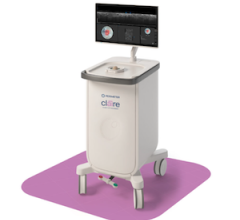
Aug. 11, 2026 — Noah Medical has launched the Galaxy II software, the next evolution of its robotic-assisted bronchoscopy (RAB) platform. The Galaxy II software gives physicians imaging flexibility and procedural control to take on their most complex cases with confidence, advancing what bronchoscopy can deliver across every dimension of the procedure. Lung cancer remains the leading cause of cancer death worldwide, and survival depends heavily on early diagnosis, making the ability to accurately biopsy small, hard-to-reach lung lesions one of the most consequential steps in a patient’s path to treatment.
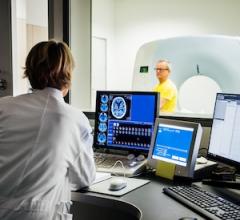
At the center of the system is Dual-Mode Imaging, which lets physicians move seamlessly between Galaxy’s High- Definition Digital Tomosynthesis (HD-DT) and Cone-Beam CT (CBCT) at any point in a procedure. HD-DT delivers efficiently and effectively across the vast majority of cases at a fraction of the radiation dose, while CBCT is available at the moment a case calls for more. The result puts the imaging decision where it belongs, in the physician’s hands.
“Galaxy II software puts physicians in control of their imaging strategy for every procedure,” said Jian Zhang, founder and CEO of Noah Medical. “By bringing HD-DT, CBCT, and advanced robotic control together in one platform using the Galaxy II software, we let physicians choose what each case requires, enabling them to adapt to each patient’s anatomy and reduce radiation exposure while maximizing procedural efficiency.”
Accurately reaching and sampling small pulmonary lesions remains difficult due to two persistent challenges: CT-to-Body Divergence, where the preoperative CT no longer matches the patient’s anatomy during the procedure, and Tool-Tissue Divergence, where a biopsy tool drifts from its intended path even when the catheter is well positioned. Galaxy II software addresses both by uniting navigation, imaging, and real-time confirmation of the lesion and tool in a single platform.
“The Galaxy System’s unique ability to correct for tool-tissue divergence in real time drives its high diagnostic yield, giving physicians confidence that their biopsy tool is exactly where they intend it,” said Dr. Francisco Almeida, Interventional Pulmonologist at City of Hope Cancer Center Atlanta. “Galaxy II software builds on that foundation, enhancing navigation, imaging, and confirmation in a single platform. It puts the choice of imaging modality in the physician’s hands, so procedures run more efficiently while also cutting the radiation burden on patients and clinicians.”
Galaxy II
Dual-Mode Imaging gives physicians the freedom to match imaging to the moment. HD-DT handles most cases with speed and a low radiation profile, and CBCT is available within the same platform whenever complexity demands it. Paired with Lesion Focus, which minimizes disruptive imaging artifacts for a clearer view of the target lesion, Galaxy II supports more confident targeting exactly when it matters most.
The Galaxy II update delivers more responsive, predictable control with improved reach, flexibility and stability helping physicians navigate challenging anatomy with precision through every turn. Imaging choice minimizes case time by reducing workflow complexity and streamlining procedures.
The Galaxy II software expands the Galaxy System’s capability without expanding burden. Based on published literature, HD-DT provides effective imaging for most cases at up to 10 times lower radiation dose than CBCT. Physicians can reserve CBCT for the moments it is truly needed, protecting patients and staff from additional radiation.
The Galaxy System has demonstrated strong clinical performance across prospective and real-world studies. In the multicenter MATCH II study, real-time lesion localization supported a 96.7% diagnostic yield using ATS strict definitions, and a separate evaluation of 100 consecutive patients at Cleveland Clinic reported a 90% diagnostic yield in routine clinical practice.
 September 25, 2026