Getty Images
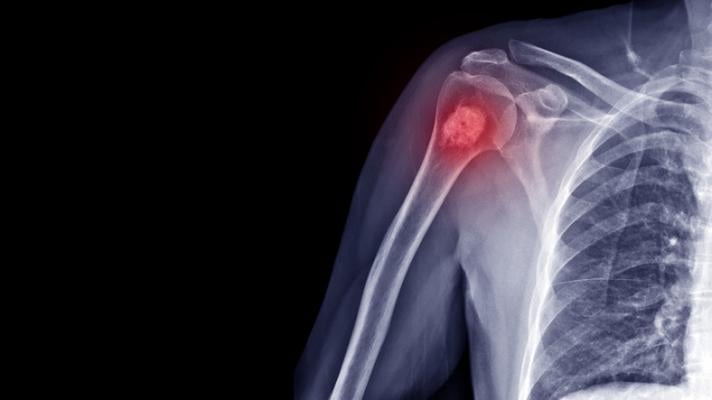
March 4, 2021 — Benign bone tumors may be present in nearly 20 percent of healthy children, based on a review of historical radiographs in The Journal of Bone & Joint Surgery. The journal is published in the Lippincott portfolio in partnership with Wolters Kluwer.
Although that may sound frightening, non-ossifying fibromas and other common benign bone tumors in symptom-free children are harmless and may resolve over time, reports the new study by Christopher D. Collier, M.D., of Indiana University School of Medicine and colleagues. “These findings provide unique evidence to answer many commonly encountered questions when counseling patients and their families on benign bone tumors,” the researchers wrote.
Study offers reassurance that benign bone tumors in healthy children are harmless
Benign bone tumors are commonly detected in children incidentally on radiographs made for other reasons. Although some benign childhood bone tumors are classified as active or aggressive, these are usually discovered when they cause discomfort or pathologic fracture (caused by underlying disease).
When latent benign bone tumors are discovered incidentally in an asymptomatic child, the child is usually evaluated by a specialist, such as a pediatric orthopaedic surgeon or orthopaedic oncologist. For some specialists, children with benign tumors account for more than half of new patients.
“Understandably, these tumors cause a lot of anxiety for patients and families as they await confirmation that the tumor is benign,” Collier said. “They need reassurance and often ask how common these tumors are, when did they first appear, and whether they will resolve over time? We don’t have much evidence to date to address these questions.”
The researchers analyzed a unique collection of radiographs from a study called the Brush Inquiry, in which a series of healthy, “normal” children in Cleveland, Ohio, underwent annual radiographs from 1926 to 1942. Although the Brush Inquiry provided valuable information on skeletal growth and development in children, such a study couldn’t be performed today for ethical reasons, now that the risks of radiation exposure are recognized.
Close to a century later, the Brush Inquiry radiographs provide a unique opportunity to identify benign bone tumors and their outcomes over several years of follow-up. Collier and colleagues analyzed a total of 25,555 digitized radiographs in 262 children, followed from infancy to adolescence.
The results confirmed the high prevalence of benign bone tumors. A total of 35 benign bone tumors were found in 33 children – an overall rate of 18.9 percent when considering that only the left side of the children was radiographed.
More than half of the tumors were a type called non-ossifying fibromas, which are masses of connective tissue that have not hardened into bone. These fibromas tended to appear around age five, with another peak around the time of skeletal maturation, possibly related to changing growth rates. Of 19 non-ossifying fibromas detected, seven disappeared over time. Others may have resolved in the years after the children stopped undergoing annual radiographs.
Less-common benign bone tumors included enostoses, sometimes called “bone islands”; and osteochondromas or enchondromas, representing areas of abnormal but harmless cartilage growth. These tumors persisted through the last-available radiographs in all patients who had them.
The findings are generally consistent with previous studies of the rates of benign bone tumors in healthy adults. It is one of the first studies of benign bone tumors in children, and the only one to provide longitudinal follow-up, including the age at first appearance. Collier added: “Despite the inherent limitations of our historical study, it may provide the best available evidence regarding the natural history of asymptomatic benign childhood bone tumors.”
For more information: www.jbjs.org/
Related children's imaging content:
Children's National First in United States to Destroy Bone Tumors with Focused Ultrasound
Minimally Invasive Radiofrequency Ablation Removes Teen’s Benign Bone Tumor
Pediatric Imaging News Channel
 October 19, 2026