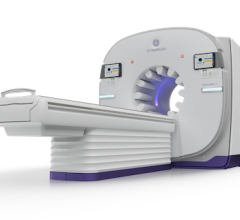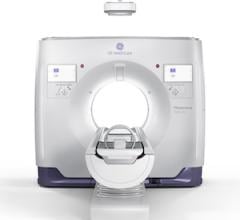
GE HealthCare recently received FDA 510(k) clearance for its SIGNA MAGNUS,[i] a 3.0T high-performance, head-only magnetic resonance imaging (MRI) scanner. This system offers new capabilities for both clinical imaging and neuroscience with the potential to aid in the detection of neurological, oncological, and psychiatric conditions.
The SIGNA MAGNUS features an asymmetrical, high-efficiency, head-only gradient coil design, which achieves higher gradient performance due to its reduced inner diameter, specifically tailored for neuroimaging. The asymmetrical design shifts the gradient isocenter to the patient edge of the coil rather than its geometric center, enabling patient head access and avoiding shoulder width constraints. This head-only design allows MAGNUS to deliver a gradient amplitude and slew rate far surpassing those of conventional 60cm or 70cm bore whole-body MRI systems, marking a significant advancement in MRI technology for neuroimaging applications.
"Obtaining FDA clearance further validates our commitment to not only innovating but also in delivering clinical technologies that have real-world impact," said Jason Polzin, GM, MR Applications Platform and Research Technologies, GE HealthCare. "With SIGNA MAGNUS, we are providing neuroradiologists and neuroscience researchers a tool that supports advanced imaging and biomarker research and discovery previously impossible on conventional systems. It is our intent to make SIGNA MAGNUS widely available as a fully cleared commercial product."
A New Standard
SIGNA MAGNUS offers precision, enabling high-resolution, high signal-to-noise ratio imaging, advanced diffusion techniques, and short scan times. To date, four investigational MAGNUS systems have been installed at Walter Reed National Military Medical Center, University of Iowa, University of Wisconsin – Madison and Brigham and Women’s Hospital.
Dr. Vince A. Magnotta, PhD, Director of the MR Research Facility and Professor of Radiology – Division of Neuroradiology, University of Iowa, said, "FDA clearance is important because there’s a broad need for new biomarkers to study neurodegenerative disorders, and there’s an opportunity to better understand what’s happening in psychiatric disorders."
GE HealthCare has demonstrated leadership in high-performance gradient technology with the introduction of HyperG gradients, one of the most efficient gradient coils on the market[ii], in the SIGNA MAGNUS system. The asymmetric head-only design of the HyperG gradient coil invokes significantly less Peripheral Nerve Stimulation (PNS) thus maximizing the actual use of the system’s gradient performance for both clinical and research scanning.
The HyperG gradient technology achieves remarkable performance levels of 300 mT/m and 750 T/m/s, enabling faster image acquisition while using the same power requirement as the whole-body SIGNA Premier 3.0T system. Shorter scan times mean less time spent in the MRI machine, which is particularly beneficial for patients who may have difficulty remaining still or those with claustrophobia. Improved gradient strengths lead to enhanced spatial resolution and image clarity. This can result in accurate diagnoses, allowing healthcare providers to detect subtle abnormalities and provide better treatment options.
Clinical and Research Excellence
The enhanced capabilities of the SIGNA MAGNUS system provide ultra-high anatomical resolution with shorter scan times. Its ability to visualize brain function, microstructure, and micro-vasculature through innovations such as ODEN (Oscillating Gradient Diffusion Encoding) which uses oscillating gradients to provide cellularity contrast which can be important for neurological oncology. Our intention is to leverage the high-gradient performance of SIGNA MAGNUS capabilities to allow for advanced research scanning such as high B-value diffusion imaging, fMRI for investigating the BOLD (Blood Oxygen Level Dependent) response and measurement of slow CSF (Cerebral Spinal Fluid) flow. This marks a transformative step forward in advancing neuroscience research.
“We're very excited about the capabilities SIGNA MAGNUS provides,” said Kawin Setsompop, PhD, Associate Professor of Radiology and by courtesy Electrical Engineering, Associate Chair of Research Strategic Development, Stanford University. “I plan to leverage the gradient performance to look at microstructures with diffusion imaging, such as axonal diameter. Additionally, using the high slew rate for efficient readout in terms of EPI and spiral to sample k-space faster will help achieve higher resolution with fewer artifacts.”
SIGNA MAGNUS will be available for both forward production and upgrades from compatible SIGNA Premier systems. This means that existing facilities can upgrade to this advanced technology, expanding access to high-performance imaging without the need for entirely new systems, additional power or cooling. This FDA clearance empowers the clinical community to adopt SIGNA MAGNUS into routine practice and further advances research in critical areas such as neurodegenerative, neuro-oncology and psychiatric disorders.
Learn more about SIGNA MAGNUS at gehealthcare.com.

 October 07, 2026