Oct. 15, 2026 — GE HealthCare has announced that its MINItrace Magni cyclotron has achieved CE Mark and that its PETtrace Solid Target Platform is expanding beyond Gallium-68 with support for Copper-64 (⁶⁴Cu) production. Together, the developments reflect the company’s focus on helping institutions build the production capabilities behind their molecular imaging programs—from establishing local PET radioisotope production to supporting research into emerging radiopharmaceuticals.
For healthcare providers building or expanding a positron emission tomography (PET) program, access to tracers is an important consideration. Many PET radioisotopes have short half-lives, making proximity between production and use a factor in supply planning. Cyclotrons produce these radioisotopes, which can then be incorporated into radiotracers used in PET imaging. Local production can give providers greater control over supply and scheduling while reducing reliance on external production and transportation.
“The molecular imaging landscape is being reshaped by the expansion of theranostics, the introduction of new PET tracers, and demand across oncology, neurology and cardiology,” said Erez Levy, Vice President of Molecular Imaging at GE HealthCare. “As tracer portfolios broaden, healthcare providers need reliable access to radioisotopes and the flexibility to respond to changing clinical needs. That calls for a longer-term view of radiopharmaceutical production — one that supports established services while allowing institutions to prepare for new clinical and research applications.”
Supporting Local Production
For institutions seeking to establish or expand in-house production, MINItrace Magni brings together a compact, self-shielded design and simplified operation. The cyclotron is designed to produce Fluorine-18 (¹⁸F), Carbon-11 (¹¹C), Oxygen-15 (¹⁵O) and Nitrogen-13 (¹³N) for PET tracers. Its CE Mark represents an important milestone for a system designed around the needs of in-house PET radioisotope production.
Aiming to help extend day-to-day operations, MINItrace Magni features an intuitive user interface and a three-click workflow designed to streamline routine production steps. Automated features are intended to simplify setup and operation, including auto-tuning, which prepares the cyclotron and targets, tunes the beam and manages target irradiation.
Producing the radioisotope is only one part of preparing a PET tracer. When used with GE HealthCare’s TRACERcenter Solutions, MINItrace Magni is designed to support a broader PET radiopharmacy workflow based on an institution’s clinical, operational and tracer-production needs. This approach supports providers in developing tailored local radiopharmaceutical capabilities aligned to the specific requirements of their molecular imaging programs, while considering both current and future departmental needs to create a sustainable holistic solution.
Broadening the Possibilities
Alongside decisions about where to produce radioisotopes, institutions must consider which radioisotopes their programs will need. For those seeking to broaden their production capabilities, the addition of Copper-64 extends the PETtrace Solid Target Platform beyond the production of Gallium-68, for which it was introduced in 2022, and Zirconium-89, which was made available in early 2026. The capability broadens the range of isotopes that may be produced using PETtrace cyclotron infrastructure, allowing customers to build on the platform as their isotope needs evolve.
Copper-64’s relevance includes exploring its potential role in connecting imaging with investigational therapeutic applications. It enables PET imaging and is also being studied with investigational Copper-67 agents as a potential diagnostic and therapeutic pair. This research sits within the broader field of theranostics, which connects molecular imaging with targeted radionuclide therapy. Clinical research is evaluating Copper-64-labeled compounds in areas including prostate cancer and HER2-positive breast cancer.
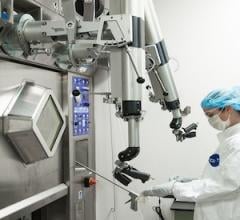
Supporting that work involves more than the cyclotron alone. GE HealthCare’s capabilities in cyclotrons, targetry, radiochemistry synthesis, molecular imaging and services are intended to help institutions establish solid-target production as part of a broader radiopharmacy workflow.
“A molecular imaging program needs a plan for the tracers it uses today and the ones it may want to explore tomorrow,” said Nicolas Durand-Schaefer, General Manager, Molecular Imaging, International, GE HealthCare. “MINItrace Magni’s CE Mark is an important milestone for a compact, versatile cyclotron designed to support local radioisotope production and enable healthcare providers to build radiopharmacy capabilities without the need for large-scale production infrastructure. Adding Copper-64 to PETtrace broadens the platform’s capabilities to support copper-based imaging and theranostics research. Our focus is on helping institutions connect the practical demands of running a radiopharmacy with their longer-term clinical and research ambitions.”
Both developments build on more than 40 years of GE HealthCare experience in cyclotron and PET radiopharmacy technologies, extending the company’s focus on the production capabilities and workflows that support molecular imaging.
For more information about GE HealthCare’s PET radiopharmacy solutions, visit gehealthcare.com.


 October 13, 2026