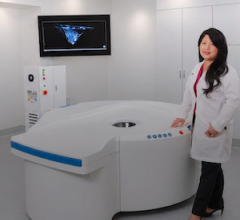
Philips Healthcare's CT systems use the iDose application that enables clinicians to reduce X-ray radiation dose by up to 80 percent.

iDose uses an iterative dose-reduction algorithm that calculates raw images. Post-processing with iDose occurs without a time penalty while maintaining image quality, due to hardware that allows for a reconstruction speed which is 20-times faster than current hardware. This means patients don’t have to wait long for the results of their CT scans. iDose was designed to provide the same look and feel of the original higher dose images, so there’s no learning curve on the new images, just less dose for the patient.


Additional Content

News | Radiology Imaging

Nov. 24, 2026 — MedScout has released The 2027 Radiology Market Outlook, a report on how AI, payment and staffing are ...

Time November 25, 2026
arrow
News | Radiology Imaging

Nov. 23, 2026 — ScanLab will debut its Imaging Performance System at RSNA 2026, introducing a comprehensive approach to ...

Time November 23, 2026
arrow
News | RSNA

Nov. 18, 2026 — Nanox Imaging Ltd. will showcase technologies designed to enable earlier detection and broader access to ...

Time November 20, 2026
arrow
News | Breast Imaging

November 16, 202— Hoag recently announced it is the first hospital on the West Coast to offer a new breast imaging ...

Time November 18, 2026
arrow
News | FDA

Oct. 23, 2026 — Coreline Soft has received U.S. Food and Drug Administration (FDA) 510(k) clearance for AVIEW Aorta ...

Time November 06, 2026
arrow
Subscribe Now