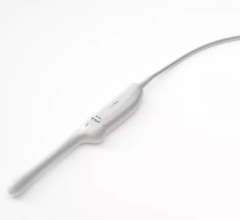
July 9, 2013 — Researchers have announced the results of a study which shows that among patients readmitted for congestive heart failure (CHF), a high E/e’ (a measure of elevated left ventricle filling pressure via ultrasound) at admission is significantly associated with higher 30-day readmission rates. Focusing on lowering elevated E/e’ levels will be important to control healthcare costs and to reduce the high rates of morbidity and mortality in this patient population.
“We are happy to report that we now have some clear indicators on who might be at most risk of being readmitted in this patient population,” said Manoj Bhandari, M.D., an investigator on the study.
Bhandari and his colleagues analyzed 1,907 CHF patients using echocardiography to check the predictive nature of various measurements and the E/e’ was found to be independently associated with higher readmission rates.
The study, "High Admission E/e’ Is Independently Associated With Higher 30-day Congestive Heart Failure Readmission Rate," was a poster presentation at the 2013 American Society of Echocardiography (ASE) Annual Scientific Sessions.
For more information: www.asecho.org

 October 07, 2026