

Greg Freiherr has reported on developments in radiology since 1983. He runs the consulting service, The Freiherr Group.
Blog | Information Technology | September 07, 2016
How Smartphones Can Make Radiologists Even Smarter
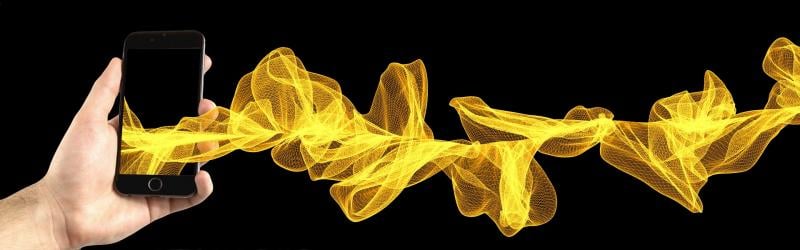
Graphic courtesy of Pixabay
Athletes warm up before a workout or game. But how might intellectuals get ready? There may be a way. And it may involve smartphones.
Research reported in the January 2015 issue of Current Biology suggested that smartphone use might warm up the cortex, reporting evidence that “an episode of intense (smartphone) use is transiently imprinted on the sensory representation. We propose that cortical sensory processing in the contemporary brain is continuously shaped by the use of personal digital technology,” the researchers concluded.
The key to stimulating the cortex — and the beneficial plasticity therein — may be repetitive finger stimulation, which suggests using smartphones may be no better than, say, playing the piano or guitar. It is beyond debate, however, that smartphones can go way beyond tickling ivories or plucking strings, as far as making professionals more effective. And that goes especially for radiologists.
Thousands of smartphone applications provide access to clinical references, medical education and decision-making tools. Many have been created specifically for radiologists. Some extend PACS and teleradiology, allowing radiologists to read images on personal digital devices, such as smartphones. Among them are zero-footprint viewers, such as Carestream’s Vue Motion, which uses a Web browser or information embedded in an electronic medical record portal, and ResolutionMD (Calgary Scientific), an enterprise image viewer that securely displays patient images.
Inexpensive Radiology Apps
These tend to be a bit pricey, but not other smartphone apps, which may cost just a few bucks or nothing at all. Many of the best known are available to iPhone users.
Diagnostic Radiology (Version 1.3, iTunes) promises a dynamic approach to abdominal radiology. It is described as fully interactive, offering extensively annotated, real clinical datasets that illustrate key concepts in abdominal anatomy and pathology.
Radiology Assistant (Version 1.4.3, iTunes; Android Version) has been around for a few years, helping radiologists download reference articles, which it categorizes by anatomy. The files download from the Radiology Assistant website hosted by the Radiological Society of the Netherlands and are stored on the smartphone.
Radiology 2.0: One Night in the ED (Version 1.0, iTunes) presents teaching files. The cases support the simulated reading of CT scans at a PACS workstation.
Radiopaedia (Version 1.1, iTunes) evolved from a series of Radiopaedia.org teaching files. The app allows users to view hundreds of cases, which they can then attempt to interpret. Each case provides questions, explanatory text, and reference articles.
Radiology Toolbox Pro (Version 2.00.02, iTunes) is a collection of charts, diagrams, and calculators used in radiology reading rooms. Its developer, Eric M. Baumel, a practicing radiologist, says the app is designed for everyday use by practitioners in and outside radiology, as well as students.
Lung Cancer Screening Guide with Lung-RADS (Version 3.0.2, iTunes) is described as being a simple, intuitive and “uncompromising” tool for streamlining lung screening workflow. It is designed to be an interactive adaptation of guidelines, disseminated by the ACR and the Fleischner Society, that address how to assess and manage radiographically detected pulmonary nodules.
“Old” School Connectivity
And there are other ways that smartphones help radiologists. They can connect radiologists with referring physicians, for example, through e-mail, instant messaging, texts and, of course, the old standby — voice. Immediate availability and impromptu consultations can help radiologists become valued members of patient management teams. Similarly, the repetitive use of smartphones might, as suggested earlier, improve or enhance cortical function.
To say that smartphones are the end all and be all of increased perceptual performance, however, clearly would be going too far, at least without including pianos and guitar. It might also be too much to say that smartphones can be leveraged to increase radiologists’ participation on patient management teams.
Beyond debate, however, is the widespread use of smartphones in the hands of radiologists and the existence of apps that, at the very least, promise to boost the performance of radiologists. And that’s interesting, in itself.
Editor's note: This is the first blog in a four-part series on Smartphones and Radiology.
Related Content
Feature | Artificial Intelligence | Kyle Hardner
A radiologist pulls up a chest CT scan flagged for a pulmonary nodule. One artificial intelligence (AI) tool writes its ...
 September 09, 2026

Feature | Artificial Intelligence | Kyle Hardner
Could the era of the empowered patient change how imaging reports are structured and presented? It’s a question on the ...
August 03, 2026 
News | Radiation Oncology
July 16, 2026 — Raidium has announced the U.S. launch of Raidium Read (R.Read), applying its AI-native imaging solution ...
July 16, 2026 
News | PACS
July 8, 2026 — Freeland Systems, a cloud PACS and clinical imaging software company, has launched its new customer ...
July 10, 2026 
Feature | PACS | John Freeland
People in healthcare technology love to talk about digital transformation like it just started happening. Cloud ...
June 29, 2026 
News | Information Technology
June 26, 2026 — Radin Health recently announced the successful deployment of its cloud-native platform at four ...
June 26, 2026 
News | Information Technology
June 24, 2026 — HOPPR Presto Agent (Presto) is now commercially available from HOPPR. Presto iis a tool that ntegrates ...
June 24, 2026 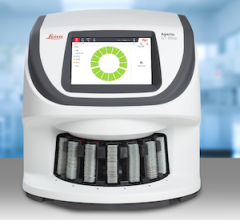
News | Digital Pathology
June 15, 2026 — Leica Biosystems is expanding the availability of its Aperio GT Elite digital scanner into the EMEA ...
June 15, 2026 
News | Imaging Software Development
June 10, 2026 — DeepHealth, Inc., a wholly owned subsidiary of RadNet, has launched Reporting Pro, an AI-powered ...
June 12, 2026 
News
June 1, 2026 — Sirona Medical and Everlight Radiology have announced a five-year strategic partnership where Everlight ...
June 04, 2026 © Copyright Wainscot Media. All Rights Reserved.

Subscribe Now