

Greg Freiherr has reported on developments in radiology since 1983. He runs the consulting service, The Freiherr Group.
Blog | Computed Tomography (CT) | December 02, 2015
It’s All About the Patient
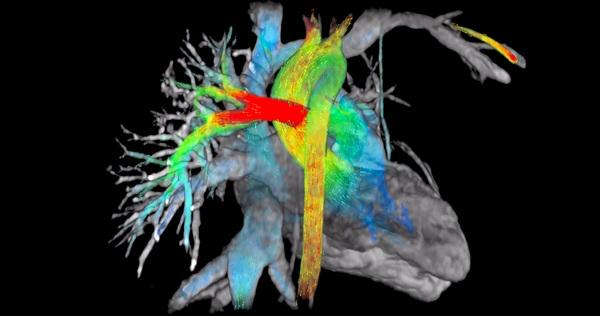
GE’s ViosWorks images the heart with 10-minute scan. (Image courtesy GE Healthcare)
There is no greater force today in radiology than the patient.
Some might argue that financial issues matter more. But they don’t.
Without the patient, there would be no financial issues. No operational concerns. No need to be efficient. Certainly no reason to be effective.
This truth has been staring radiology in the face for a long time.
Twenty years ago radiologists debated the merits of high-field imaging. Their only concern back then was image quality. Claustrophobia, which they defined as the irrational fear of tight spaces, affected only a tiny slice of the patient population.
Really, back then, nobody paid much attention to the patient. That changed, in the mid-1990s, when the boom market for MR scanners in the U.S. went bust. Open MR scanners saved it. Or, more exactly, patients did, patients who balked at sliding head first into darkened cylinders for hour-long scans punctuated by bizarre sounds. Sales of open MR scanners skyrocketed. The MR industry got back on its feet. And learned an important lesson about the patient.
Today the bores are wide. The sounds are muffled. The cylinders are lit, even outfitted with music, sometimes video. If the advanced scan protocols shown this year on the RSNA exhibit floor live up to expectations, scan times could drop to 10 or even five minutes for the brain and from 30 to 10 minutes for complex cases, such as those of the liver and the heart.
These and patient-oriented changes now on the way are because patients demanded a friendlier experience. The industry’s awareness of patient needs has since spread throughout radiology. A breast CT scanner shown for the first time as a product at this RSNA delivers image quality comparable to tomosynthesis, yet eliminates the need for painful compression of the breast.
A CT now being developed to scan just the extremities — elbows, wrists and hands; knees, ankles and feet — might be installed in clinics and physician offices in much the same way as X-ray rooms are today. It could radically change workflow, cutting the time from diagnosis to treatment. And, by allowing weight-bearing exams, this still experimental but promising scanner might even make diagnosis and treatment planning more accurate.
Dual energy and spectral CT use different energy X-rays to identify the composition of body tissues and structures, better identifying disease and helping physicians zero in on the most effective treatment. Dual-source CT in the emergency department is identifying patients stricken by heart attack, channeling them for immediate treatment, while allowing others to go home.
The latest generations of general purpose CTs — from high- to low-end — minimize radiation exposure, a development aimed squarely at benefiting the patient. Radiation reduction has become the mantra for digital radiography and fluoro units, angio and cardiac cath, as well as mammography.
IT systems track patient dose and snitch on the systems that expose patients to more than they should. Patients access their images and schedule appointments via the Internet.
Radiology is fanning across the enterprise, empowering the patient care team as it compiles and implements treatment plans. Medical images are intermingling with data from pathology and cardiology, soon even from patient wearables that track blood pressure and heart beats. Accumulated data are being mined for insights into patient outcomes, which might be translated into best practices and then form the basis of standardized management protocols — all for the benefit of patients.
The buzz at this RSNA meeting — and the several RSNAs that preceded it — was about giving radiologists the tools to become a more integral part of the patient care team. Analytics are being showcased for pulling data together from multiple reports to better manage the patient. Dashboards are being demonstrated for their ability to graphically depict trends in patient response to treatment. Deep learning algorithms are being framed for their potential to plumb radiological images and other medical data to uncover clues about how to make sick patients better and keep well patients from getting sick.
It is, literally, all about the patient. Now. Tomorrow. Next year. The decade ahead.
And it will only get more intense.
Editor’s note: This is the fourth blog in a series of four by industry consultant Greg Freiherr on The Evolution of Radiology. You can view the first blog in this series, "Radiology Faces Frightening New World," here. You can view the second blog in this series, “Imaging’s Evolution Fulfills Patient-centric Destiny,” here. You can view the third blog in this series, “Radiology’s Evolution Leaves Women Behind,” here.
Related Content

News | Information Technology
October 6, 2026 – Clearsense has introduced a cloud-based medical image archive designed to reduce the cost of ...
 October 07, 2026
News | Radiology Imaging
Aug. 13, 2026 — Epic's new Care Everywhere Diagnostic Image Exchange allows health systems using Epic to share ...
August 21, 2026 
News | Cardiac Imaging
Aug. 20, 2026 – The novel, radiopaque, polymer-based embolic coil from Embolization, Inc. has now surpassed 125 implants ...
August 20, 2026 
News | Breast Imaging
Aug. 13, 2026 – Perimeter Medical Imaging AI recently announced that Intermountain Health, the largest nonprofit health ...
August 14, 2026 
News | Lung Imaging
Aug. 11, 2026 — Noah Medical has launched the Galaxy II software, the next evolution of its robotic-assisted ...
August 10, 2026 
News | Radiology Business
Aug. 4, 2026 — Canon Medical Systems USA (CMSU) has appointed Tsuneo "Neo" Imai as president and chief executive officer ...
August 10, 2026 
News | Radiology Imaging
June 15, 2026 — Lead Glass Pro, a supplier of radiation shielding products, has expanded its turnkey installation ...
June 18, 2026 
June 1, 2026 — Serac Healthcare Ltd. has presented Phase 2 data showing that SPECT-CT imaging with the radiotracer 99mTc ...
June 01, 2026 
News | Radiology Imaging
May 18, 2026 — DICO, a company specializing in the creation of distributed diagnostic infrastructure for radiology, has ...
May 19, 2026 
News | X-Ray
April 29, 2026 — Results from a new study* presented at the American Roentgen Ray Society’s (ARRS) 2026 annual meeting ...
April 29, 2026 © Copyright Wainscot Media. All Rights Reserved.

Subscribe Now