May 29, 2012 — Ötzi, the 5,300-year-old iceman whose body was discovered in 1991 in the Ötztal Alps and who is considered to be Europe’s oldest natural human mummy, was first examined in 2001 with portable Siemens X-ray equipment, combined with Agfa’s digital radiography (DR) system ADC. Now scientists have announced the discovery of intact red blood cells in some of the wounds, the oldest blood cells ever identified. For most bodies this old, the blood cells are usually either shrunken or mere remnants, but Ötzi’s have the same dimensions as living red blood cells and resemble a modern-day sample.
German and Italian researchers using Raman spectroscopy and atomic force microscopy concluded that Ötzi did not die immediately from his shoulder wound. They detected dried blood cells and a protein called fibrin in a state of degradation from maturity, suggesting an established blood clot of more than a few days’ age. This proves that Ötzi didn’t die immediately after having been hit in the shoulder by an arrow, as is claimed quite often, but at least survived for a little while.
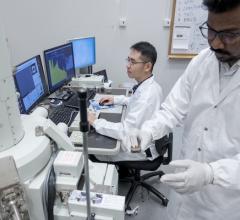
The researchers turned to a device called an atomic force microscope, which works by “feeling” rather than “seeing” an object. The minuscule probe, itself invisible to the naked eye, runs over the object like a needle on a record player. As the probe bumps up and down along the object’s contours, a laser measures the movement. The result is a 3-D “tracing” of the object. In the case of Ötzi, the roundish shapes were indeed red blood cells, resulting in the oldest definite confirmation of blood.
The used nanotechnology has potential for the field of modern forensic science, because current crime scene technology has trouble differentiating between old and new blood.


 October 07, 2026