Screening programs sometimes assume an almost mystical sense of destiny, as though the technology is fated for use. A lung cancer screening program in the 1950s through the 1970s was one of them. Chest X-rays and sputum cytology were used in the mistaken belief that they could spot lung cancer at a curable stage.
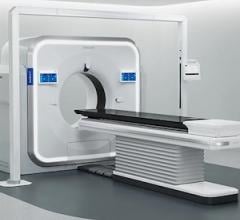
Now American medicine appears once again ready to screen for lung cancer, this time using low-dose computed tomography (LDCT). Like the venture before it, this one is noble in nature and possibly just as flawed. But, if American physicians have no alternative, they may feel compelled to go forward.
An estimated 160,000 Americans die each year from the disease. Many of them are among the one in three Americans (about 100 million) who are current or reformed smokers. Last December, the U.S. Preventive Services Task Force (USPSTF) recommended that a subset — adults 55 to 80 who smoke (or until 15 years ago had smoked) a pack of cigarettes or more a day for 30 years — should be screened with LDCT.
Following this recommendation could be remarkably expensive and disappointing. The Affordable Care Act requires Medicare and private insurers to cover medical exams and procedures receiving a grade of “B” or better from the USPSTF. (LDCT lung screening received a “B”.)
USPSTF’s recommendation was based on clinical trials published between 2000 and 2013, particularly the National Lung Screening Trial (NLST), which showed a 20 percent reduction in lung cancer mortality. Otis Brawley, M.D., chief medical officer of the American Cancer Society, notes, however, that the results also mean that 80 percent of lung cancer deaths still occur.
The estimated 8,000 to 22,000 lung cancer lives that might be saved will cost upwards of $10 billion just for the initial wave of LDCT screening. Then there is the radiation burden. Even low-dose CT delivers 1.5 mSv, roughly equivalent to 15 chest radiographs. Suspicious findings will trigger follow-up testing (higher dose CT, FDG-PET/CT and biopsy), adding to the radiation and financial burdens for false and true positives alike. Brawley expects that screening will lead to further testing in at least one out of every four. Yet, only four out of every 100 who undergo further tests, he says, will actually have lung cancer.
A simple blood test, however, may be available to eliminate or at least reduce the need for much of this testing. A blood-based assay developed by Gensignia, a privately held Italian firm, promises to significantly reduce the high false positive rate associated with LDCT. Test results show that, when paired with LDCT, the microRNA signature classifier (MSC) has negative predictive values of 99 percent and 99.86 percent for detection and death by lung cancer, respectively. This translates into a five-fold reduction in LDCT false positives, according to Ugo Pastorino, M.D., chairman of the Department of Surgery, Istituto Nazionale dei Tumori in Milan, Italy, where the assay was tested.
“This is of great clinical relevance in the context of reducing the false positive rate and the potential side effects associated with repeated LDCT scans or other unnecessary invasive diagnostic follow-ups,” Pastorino said.
Even a combination of imaging and in vitro testing, however, will not eliminate what may be the most damaging aspect of a lung cancer screening program — that such a program may enable some smokers to continue their risky behavior as they rationalize screening as a way to increase the safety of their habit.
How ironic would it be that a program designed to reduce the risk of lung cancer increased it?
This raises the question: would the money — conservatively speaking, $10 billion — be better spent on counseling and smoking cessation treatments for at-risk patients? Or, at the very least, should screening of current smokers be tied to their participation in smoking cessation programs?
Before embarking on a new initiative to screen for lung cancer, insurers and regulators would be well advised to look at past efforts aimed at this disease and make sure the program they implement this time will substantially reduce lung cancer mortality and have no significant mitigating consequences; whether an in vitro test might reduce the cost and radiation exposure, while increasing the specificity of lung cancer detection; and that the burdens put on the patient and the healthcare system are justified.
Greg Freiherr has reported on developments in radiology since 1983. He runs the consulting service, The Freiherr Group. Read more of his views on his blog at www.itnonline.com.

 October 23, 2026