Healthcare systems may want to rethink their strategy when it comes
to medical image archiving. A cloud-based medical image archive can
help reduce the cost of maintaining historical imaging data while
preserving fast, governed access when those images are needed.
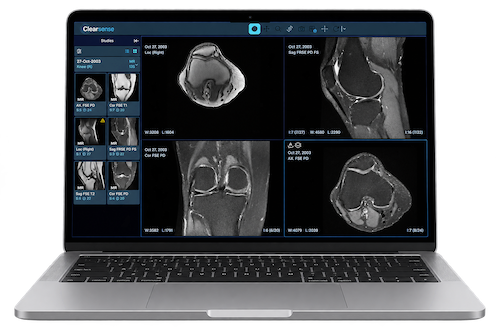
(All photos: Cleasrsense)
Most families have one. A relative with a garage full of boxes marked “misc,” a stack of National Geographics from 1987, and an unshakable conviction that all of it will be needed someday. You can’t quite call them crazy, because every so often they disappear into the garage and come back with exactly the thing you were looking for.
Health systems are like this with medical images, and they’re mostly right to be. Federal and state rules require hospitals to keep imaging for years. CMS sets a five-year minimum for hospital radiology records (42 CFR 482.26(d)(2)). Mammography facilities must keep mammograms at least five years, or 10 if no later mammogram is performed there (21 CFR 900.12(c)(4)). States can go further: North Carolina hospitals keep records for 11 years after discharge, and for minors until age 30 (10A NCAC 13B .3903). Clinical need can run longer than any of them. A study from 2008 may matter to nobody for fifteen years and then matter enormously to one patient tomorrow.
So keeping the images isn’t the mistake. The question is where they are kept. Why keep decades of historical studies on live-system storage, under live-system licensing, at live-system prices?
The Hidden Cost
Medical imaging is an enormous and growing storage problem. Each generation of scanners produces more detailed studies, a single CT can hold hundreds of images, and health systems accumulate years or decades of historical exams on top of it. Every new study adds to a footprint that rarely gets smaller.
What changes as a study ages is how often it’s opened, not what it’s worth. It’s read once, compared against a few times, and then opened rarely, but not never. That’s the economic problem. In many health systems, a study from 2011 sits on the same storage tier, under the same license, as one acquired this morning. The health system pays premium rates for data whose access pattern looks nothing like the premium workload.
None of this requires a replacement project to become expensive. It accumulates quietly, year over year, inside the systems you already run.
Two Opportunities to Save
Reduce what’s already there: Many health systems are paying today to keep historical studies on aging grid storage and under vendor licenses priced by volume. Moving infrequently accessed studies out of the live system reduces the need for expensive active storage and, where the contract allows it, the licensed volume. This doesn’t need to wait for anything.
Don’t migrate history into the next system: When a PACS is replaced, the default is to migrate every study the old system held. The health system pays for the migration, buys capacity sized for decades of history and, where licensing is volume-based, pays to license studies that haven’t been opened since the radiologist who read them retired. Consolidation after a merger multiplies it. Deciding what moves into the new platform, and what moves to an archive instead, is cheaper before the migration than after it.
Either way, the decision about what moves should come from evidence. Start with access history: when each study was last opened, and through which workflow. Add modality and age, clinical requirements such as oncology surveillance or pediatric follow-up, and retention obligations. Then put it against the contract, because the pricing terms decide where moving a study actually saves money.
Keep the Access to Medical Images, Change the Storage
None of this works if clinicians lose access. The primary experience should be the one they already have.
-
A physician reviewing a patient’s chart opens an older study from the EHR without knowing, or caring, where it’s physically stored.
-
Radiologists find and retrieve relevant priors through their existing PACS and diagnostic viewers. Diagnostic reads stay in the FDA-cleared diagnostic viewer, regulated as a Class II medical image management and processing system (21 CFR 892.2050).
-
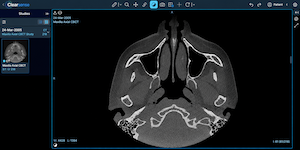
A standalone web viewer is useful for occasional review, release-of-information requests and audits. It’s a secondary door, not the front one.
If the archive is doing its job, clinicians barely notice it’s there.
Archiving Isn’t Just Cheap Storage
Moving images to lower-cost cloud storage is not, by itself, archiving. Cheap storage gives you affordable retention. An archive also has to give you predictable, clinically acceptable retrieval, and that takes software, not just infrastructure:
-
Interoperability: DICOM query/retrieve and DICOMweb integration with existing PACS, EHR and viewer workflows, with reliable patient and study matching so a prior lands on the right patient.
-
Retrieval performance: Tiering based on usage, clinical need and cost. Deep tiers can take hours to restore, and you can’t predict which study a radiologist will need at 2 a.m., so clinically accessible studies need active tiers, prefetching or caching.
-
Governance and auditability: Audit trails showing who accessed which studies, when and through which workflow (45 CFR 164.312(b)).
-
Independence from the legacy application: Proprietary formats converted to standard DICOM, and patient corrections made after the exam, such as a name change or merged record number, reconciled into the archive with every change logged.
Active archiving is an access and lifecycle-management strategy. Storage is one component of it.
Also there’s a growing, legitimate case for preserving longitudinal imaging for AI training, model evaluation and research. This will continue to evolve over time.
Coordination Across Teams
Getting there usually takes people who don’t often plan together. Clinical data archiving tends to sit close to Health Information Management, which owns the legal record and the retention schedule. Imaging often sits under radiology, with its own budget, vendors and storage contracts. Put HIM, radiology and imaging informatics, IT and finance in the same planning conversation, and measure the result in dollars actually removed, not terabytes moved.
The Bottom Line
One health system we work with moved five older imaging systems to the archive within three months and cut what it pays per terabyte each month to keep that data by 70%.
Keep the images. Keep the clinical access. Stop paying live-system prices for historical data.
The data needs to outlive the application. The application doesn’t need to outlive the data.
 Jonathan Cook is chief technology officer at Clearsense, where he leads product, engineering, security, and R&D for the company's healthcare data enablement platform. With more than 25 years in healthcare technology, he has built and launched dozens of healthcare applications and products across quality measurement, value-based care, and population health, and is a recognized expert in health data aggregation, interoperability, and governance.

 November 06, 2026