Photo: Getty Images
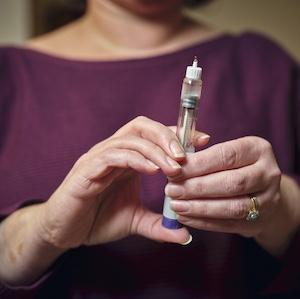
June 2, 2026 — Results of an American College of Radiology-managed retrospective study involving 110,000 women presented at the 2026 ASCO Annual Meeting, shows that those who took GLP-1 medications were up to 35% less likely to develop breast cancer than those who did not take GLP-1 drugs. ACR urges funding of a large prospective study to clarify impact of these drugs on cancer incidence and prevention.
The observational study, led by Elizabeth McDonald, MD, PhD, a professor of radiology at the University of Pennsylvania Perelman School of Medicine, shows a correlation between GLP-1 use and reduced breast cancer incidence. It joins a growing body of evidence suggesting a connection but cannot definitively confirm the drugs caused the decrease. A larger prospective study is necessary to clarify such a benefit.
“More widespread breast cancer screening and improved treatments have contributed to a more than 40% decline in breast cancer deaths in the past 40 years,” said ACR Chief Research Officer Etta D. Pisano, MD, FACR. “We need a large prospective study to determine whether use of these GLP-1 drugs can help many women avoid developing the disease at all. Given the evidence to date, that is a next logical and potentially lifesaving step.”
Retrospective GLP-1 Study
The retrospective study utilized the health records of women undergoing breast imaging at the University of Pennsylvania and its affiliates. It was led by Elizabeth McDonald MD, PhD, professor of radiology and chair of ACR's Breast Imaging Research Committee, with Dr. Pisano as senior author. ACR Biostatistician Laura Gillis, PhD, served as the study statistician.
The ACR Center for Research and Innovation has supported multiple trials for cancer screening over its long history, including the National Lung Screening Trial, National CT Colonography Trial, and the ongoing National Cancer Institute-funded Tomosynthesis Mammographic Imaging Screening Trial (TMIST), run under the auspices of the ECOG-ACRIN research base.
TMIST has recruited approximately 109,000 women worldwide, with 21% African Americans in the U.S. cohort. That well-characterized population, along with other women presenting for breast cancer screening, would be ideally suited to study the preventive effects of the GLP1 drugs in a prospective clinical trial.
 September 30, 2026