Photo: Getty Images
May 27, 2026 — A large multisite study of older people with cognitive impairment finds that Black and Hispanic people, while known to be far more apt to have dementia, are significantly less apt than other racial and ethnic groups to show Alzheimer’s pathology on brain scans. The study, reported in Alzheimer’s & Dementia: The Journal of the Alzheimer’s Association, was led by researchers at Vanderbilt Health.
“These results suggest that the yawning ethnoracial differences in dementia may be driven in part by group differences in underlying causes of dementia symptoms,” said corresponding author Consuelo Wilkins, MD, MSCI, the Mildred Thornton Stahlman Professor in Rural Health and professor of Medicine in the Division of Geriatric Medicine. “We need desperately to combat the scourge of Alzheimer’s, but our results highlight that a fixation on Alzheimer’s pathology, to the exclusion of other causes of dementia, could inadvertently worsen stark ethnoracial health differences. Our findings urge further study.”
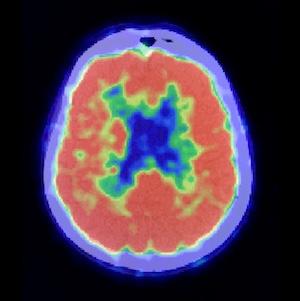
Amyloid plaques in the brain are a hallmark of Alzheimer’s disease, which accounts for 60%-80% of dementia. People who develop other forms of dementia may lack these plaques altogether.
New Dementia Study
The new study includes 5,757 Medicare recipients from across the country with mild cognitive impairment or dementia. It’s among the largest positron emission tomography (PET) brain imaging studies to date exploring ethnoracial differences in people with cognitive impairment.
“Among people with cognitive impairment, normal PET results may lessen treatment access and clinical trial eligibility. Our results confirm that these disadvantages are apt to fall inordinately on Black and Hispanic people. Meanwhile, our finding that odds for PET positivity were 40% greater in the most disadvantaged areas compared to the most prosperous areas was another signal result of this study,” said first author Corey Bolton, PsyD, assistant professor of Medicine in the Division of Geriatric Medicine.
The investigators took pains to gather a diverse group of participants from across the country, seeking to view PET amyloid positivity in cognitive impairment through the lens of ethnoracial differences and nonmedical drivers of health such as education. In the analysis, 22% of participants are Black, 20% are Hispanic, and the remaining 58% are classified as from “any other racial/ethnic group,” or AORE.
Nonmedical drivers of health tracked in the study included gender, education attainment, type of Medicare coverage (traditional or Medicare Advantage), and area deprivation index (ADI), which is a neighborhood-level metric ranking areas by socioeconomic disadvantage. The investigators divided ADI into quintiles: prosperous (lowest ADI), comfortable, mid-tier, at-risk, and distressed (highest ADI).
A 2022 study in JAMA of 1.9 million participants ages 55 and older found that, compared to odds among white people, dementia is 54% more likely in Black people and 92% more likely in Hispanics.
In the new study:
-
Compared to AORE, odds of amyloid positivity were 28% lower among Black people and 22% lower among Hispanic people.
-
Compared to AORE, Black and Hispanic participants were more likely to present at the dementia stage rather than with mild cognitive impairment and were more than twice as likely to be enrolled in Medicare Advantage plans, which the authors tie to access-to-care barriers.
-
Odds of amyloid positivity in comfortable and distressed areas were 22% and 40% higher, respectively, than in prosperous areas, while PET positivity odds in mid-tier and at-risk areas did not differ from those in prosperous areas.
-
No significant differences in positivity odds were found when compared across gender, education attainment, or type of Medicare coverage.
Wilkins and Bolton were joined by 18 co-authors from 11 institutions. The study was funded by the Alzheimer’s Association, the American College of Radiology, Avid Radiopharmaceuticals Inc., General Electric Healthcare, Life Molecular Imaging, and the National Institutes of Health (under award U24TR004432).

 October 07, 2026