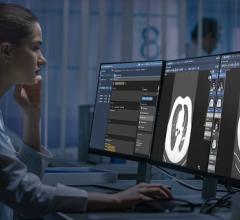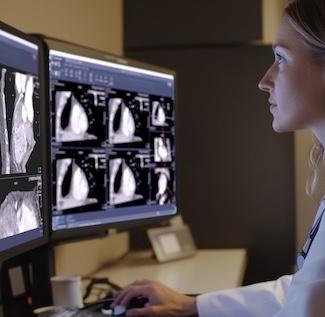
Philips Image Management 15, the next generation
of Philips Vue PACS. (Photo: Philips)
Nov. 24, 2025 — Royal Philips is launching Philips Image Management 15, the next generation of Philips Vue PACS, including a zero-footprint, web diagnostic viewer1 that transforms how radiologists access and interpret medical images. Designed with a new user interface, the viewer delivers the full clinical power of a desktop workstation through a standard web browser. It combines clinical depth, mobility and scalability, enabling radiologists to work smarter, faster and more collaboratively – while giving back time to clinical teams and reducing IT complexity across the enterprise.
Complete Diagnostic Experience
In today’s healthcare environment, time, accuracy and accessibility are critical. The viewer helps address one of healthcare’s most persistent challenges, lost clinical time caused by slow performance and the complexity of remote reading. It delivers high-performance server-side rendering, workflow automation, and a full suite of advanced clinical tools — all accessed securely through a web browser, with no local installation required.
“We were among the first to test the new Philips web-based diagnostic viewer, and the difference is clear. It loads studies quickly and runs smoothly, even with large datasets. The new interface is intuitive and lets us focus entirely on the images, a real step forward in performance and usability,” said Pieter Hoste, Chief Radiologist and Head of Medical Imaging, AZ West Hospital, Belgium.
Processing between the client and server is optimized to ensure seamless performance, even with large, complex datasets such as digital breast tomosynthesis or cardiac CT. This delivers consistent, high-quality image interpretation — whether radiologists are working on-site, across the enterprise or remotely – while simplifying IT deployment and management.
The web-based viewer interfaces with connected AI tools to bring together all relevant patient information in one place, supporting faster, more informed diagnoses. Natively connected to the interactive reporting module, it manages reporting in the PACS workflow, eliminating the need for separate dictation or reporting systems and enabling radiologists to review images and generate comprehensive reports without leaving their reading application.
The new user interface provides access to a comprehensive suite of advanced clinical applications and accelerates interpretation by aligning images across modalities and time points, all seamlessly integrated with the interactive reporting application. Combined with the Philips Advanced Visualization Workspace, which embeds deeper analysis results directly into the reporting workflow, clinicians benefit from greater efficiency and productivity.
Cloud-enabled Deployment
The viewer is built for cloud deployment through Philips HealthSuite, powered by Amazon Web Services (AWS), with an on-premises option for added flexibility. This approach preserves current infrastructure investments and enables a seamless transition to the cloud at each organization’s pace.
“Health systems are under intense pressure to do more with less. The web diagnostic viewer is a milestone in our journey toward cloud-enabled, AI-integrated diagnostic imaging. It brings the power of advanced visualization, collaboration, and intelligence to any browser, helping radiologists stay connected and productive wherever care happens while streamlining IT operations,” said Madhuri Sebastian, Business Leader Imaging Informatics at Philips.
The web-based diagnostic viewer on Philips HealthSuite cloud is offered as a SaaS (Software as a Service) solution, with built-in security, and effortless scalability across multiple sites. It ensures consistent performance and collaboration for teams working on-site, remotely, or across borders and is currently available in the USA, with expansion to additional regions planned for 2026.
At RSNA 2025, Philips will highlight its new informatics solutions and AI-driven imaging ecosystem in development, featuring generative AI to automate workflow tasks like display protocol normalization and patient summaries, and Agentic AI2 for anatomy-aware automation that streamlines study prioritization and workflow orchestration.
- The Philips web diagnostic viewer is available today to select customers, with broader market availability to follow. Future availability cannot be ensured.
- Work in progress, not available for global distribution. Future availability cannot be ensured.

 July 16, 2026