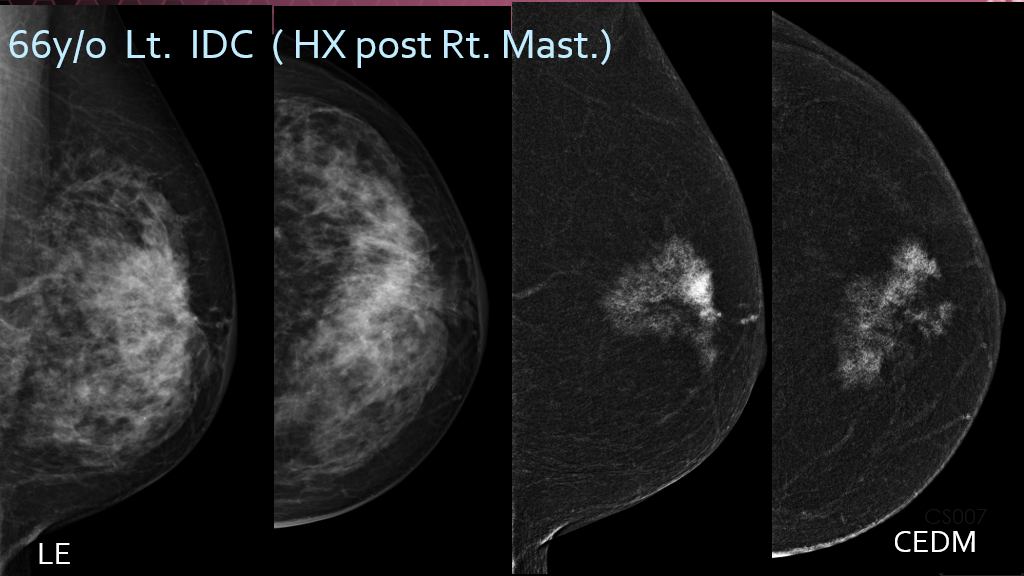
Shown here is a side-by-side comparison of conventional low energy imaging (left photos) vs. CEDM imaging (right photos) of an Invasive Ductal Carcinoma in a 66-year-old patient with dense breasts. You can see in the conventional imaging the cancer cannot be seen very well, but in the CEDM imaging it is quite evident.
In breast cancer detection, speed and accuracy are more than clinical goals – they can significantly increase chances for cure and impact treatment paths and outcomes. Too often, women face barriers to advanced imaging due to cost, access, or availability. As healthcare systems seek solutions that empower providers and improve patient outcomes, one innovation is taking shape as a powerful ally: contrast-enhanced digital mammography (CEDM).
CEDM represents the future of breast imaging, offering providers and patients an alternative to MRI that is faster and more affordable without sacrificing diagnostic accuracy.
Breast Cancer Imaging Challenges
For women with dense breast tissue, traditional mammography may not provide sufficient visibility, making cancers harder to detect. While MRI remains the gold standard for sensitivity, it comes with limitations: higher costs, longer scan times, and limited availability, particularly outside major medical centers.
This creates an urgent need for a "middle ground" modality that delivers high diagnostic performance but aligns with the realities of everyday clinical practice.
The Power of CEDM
By combining digital mammography with the administration of intravenous contrast material, CEDM enhances visualization of lesions that might otherwise be obscured. Clinical studies show that CEDM can detect additional cancers not seen on conventional mammograms, particularly in women with dense breasts. By better differentiating cancerous tissue from normal dense breast tissue, CEDM can potentially lower the rate of unnecessary biopsies from benign findings, or “false positives.”
Compared to MRI, CEDM exams are faster — often completed in less than 10 minutes — and typically cost significantly less, easing the financial burden on both health systems and patients. CEDM also provides a more comfortable alternative for patients who may experience claustrophobia inside the MRI tunnel. With minimal changes to workflow and equipment, imaging centers can integrate CEDM into their existing operations, expanding access without overhauling infrastructure.
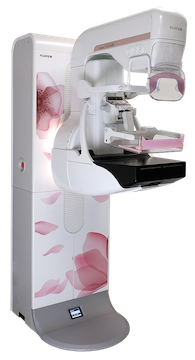
Fujifilm Healthcare Americas Corp. has developed advanced CEDM solutions designed with the patient in mind. The Aspire Cristalle is built to ensure image quality, operational excellence, and an overall better patient experience.
Improving Access, Expanding Equity
Contrast-enhanced mammography has the potential to expand access to advanced breast imaging. In rural and underserved communities where MRI facilities may be scarce, CEDM can provide critical diagnostic capabilities without requiring expensive new equipment, added space, construction or staffing.
CEDM is also an option for women with dense breasts whose insurance will not cover an MRI, which can cost thousands of dollars out-of-pocket. Improving visualization and detection in dense breasts, helping better diagnose inconclusive mammogram/ultrasound findings and for pre-surgical planning.
Patient-Centered Future
Technology alone does not solve disparities or improve outcomes; it must be deployed thoughtfully, with a laser focus on patient needs. That’s why Fujifilm continues to invest in developing imaging solutions that not only push the boundaries of diagnostic excellence but enhance the overall care experience.
As we look to the future, we believe contrast-enhanced digital mammography should and will become an indispensable part of the breast imaging toolkit. It is not a replacement for MRI but can serve as a powerful complement that provides choices, improves efficiency, and most importantly, advances women’s healthcare into the future.
Click here for more information on Aspire Cristalle and other women's health issues.
Christine Murray is Marketing Director – Women’s Health at Fujifilm Healthcare Americas Corp.

 September 30, 2026