Getty Images
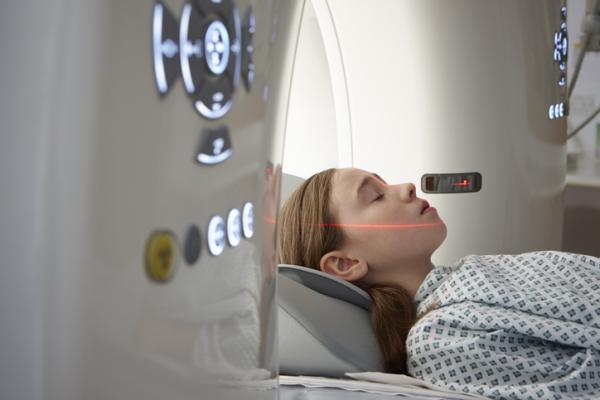
May 2, 2024 — Head and abdominal trauma is a leading cause of death for children. About 1%–2% of children who come to emergency departments with head or abdominal injuries require immediate intervention. These injuries are diagnosed the world over by computed tomography (CT) scans. But CT-related radiation can cause cancers later in life, and accumulated evidence suggests that CT is overused.
“There is an urgent need for validated guidelines for the safe use of CT to diagnose injured children while preventing unnecessary radiation exposure,” says Pradip Chaudhari, MD, Director of Research and Scholarship, Division of Emergency and Transport Medicine, at Children’s Hospital Los Angeles.
To help medical teams avoid unnecessary CT scans, the Pediatric Emergency Care Applied Research Network (PECARN), a federally funded network of institutions performing pediatric emergency medicine research, previously developed a set of predictive guidelines. But how well would these decision tools work in practice?
Prediction vs. reality
To validate the PECARN prediction rules, CHLA researchers collaborated on a prospective, multicenter study funded by the National Institutes of Health, enrolling thousands of children who came to the CHLA Emergency Department over a five-year period.
Nationwide, the study enrolled 7,542 children and adolescents under 18 years old who received CT scans at six pediatric emergency departments for blunt abdominal trauma, as well as almost 20,000 children with minor head trauma, who were divided by age into two groups: younger than 2 years, and 2 years and older. The primary outcome for the abdominal trauma group was intra-abdominal injury needing acute intervention, and for the head trauma cohort, clinically important traumatic brain injury. The children were evaluated against the variables of the relevant PECARN prediction rule before actual CT results were seen. The researchers found:
The intra-abdominal injury rule had a sensitivity of 100.0% and could predict at 100.0% accuracy if a child did not need a CT scan.
The traumatic brain injury rule for children younger than 2 years had a sensitivity of 100.0% for clinically important traumatic brain injuries and could predict with 100.0% accuracy if a child did not need a CT scan; for children ages 2 and older, a sensitivity of 98.8% and prediction at 100.0% accuracy if CT scan was unnecessary.
“We found both the PECARN intra-abdominal injury and traumatic brain injury prediction rules were safe and effective with a high degree of accuracy,” says Dr. Chaudhari, study co-author. “Using these guidelines will help emergency departments to safely minimize unnecessary CT scans in children.”
The researchers’ findings were published in The Lancet Child & Adolescent Health.
For more information: www.thelancet.com

 October 08, 2026