December 5, 2023 — Radiology is under severe economic pressure as reimbursement rates fall for many common scans. At the same time, procedure volume is climbing with the aging population, and the specialty is encountering staffing difficulties for both radiologists and radiologic technologists.
As evidenced by the technical exhibits at RSNA, the advancement of AI is delivering gains in image interpretation, report generation, and acceleration of imaging techniques. From Quantivly’s Chief Product and Customer Officer, Robert MacDougall: “These advances in AI have the potential to drastically improve patient care but will create a massive coordination problem of imaging many more patients, each with a bespoke protocol, on the radiology department’s most precious capital asset (MRI and CT scanners). Quantivly’s digital twin and smart recommendation engine is the solution to this challenge, enabling better imaging care to more patients, and a win-win-win for providers (to capture unrealized revenue), patients (increased access and personalized care), and staff (augmented with AI to reduce burnout).”
Quantivly's origin story
Radiology is producing more data than ever before, but it is unusable – locked due to its unstructured and siloed nature. The result of this data chaos is an operational black whole that impacts all stakeholders: patients, providers and staff.
A spin-off from Boston Children’s Hospital, Quantivly started with the realization that much of the operational data exists – in both HL7 and DICOM formats – but it is siloed, messy, unstructured and, as a result, frozen. Quantivly solves the problem of “data liquidity” by extracting image pixel data, metadata and Radiology Information System (RIS) messages on-the-fly, cleaning, harmonizing it, and structuring it with its Harmonization Engine to make it fully query-able, and building a new ontology that describes radiology operations.
Quantivly @ RSNA 2023
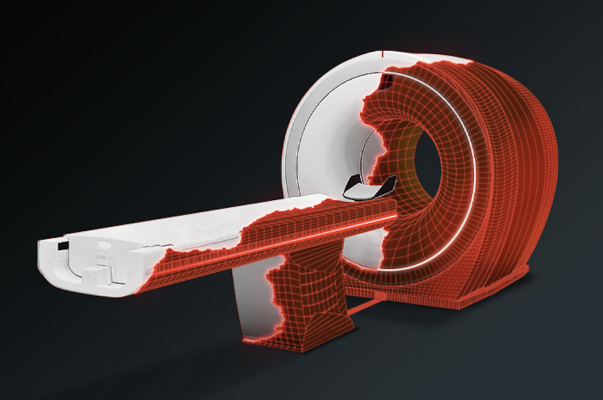
This year, Quantivly goes further, leveraging their proprietary data layer to build Digital Twin of Radiology Operations and Smart Recommendation Engine.
From Quantivly’s CEO, Benoit Scherrer: “We have executed on our vision to build the “digital twin” for radiology operations to re-imagine the management of medical imaging. Digital twins are dynamic, digital replicas of complex physics systems (e.g. hospitals) that allow users to simulate real-world conditions, play out “what if” scenarios”, and simulate the impact of interventions in-silico. The digital twin is the enabling technology for our Smart Recommendation Engine, which continuously crunches massive data to surface insights and actionable interventions, and track the impact of these interventions over time – a revolution in the management of radiology operations.”
For more information: https://quantivly.com/

 November 04, 2026