Image courtesy of Mount Sinai
April 11, 2022 — Mount Sinai researchers have developed a novel method to identify aggressive early-stage lung cancers and target drugs known as aurora kinase inhibitors to tumors that are especially likely to respond to them. The findings, published in Nature Communications on March 24, could lead to great advances in treatment for lung adenocarcinoma, the most common type of lung cancer.
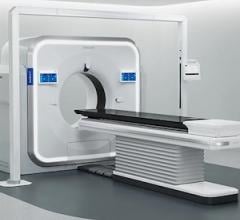
The Mount Sinai team used a genomics network model to measure tumor invasiveness—distinguishing aggressive tumors from so-called “indolent” ones, which often cannot be told apart via chest CT scan—and identify those that will respond to aurora kinase inhibitors, molecules that can inhibit gene signature regulators.
“The approaches to diagnosing and treating early-stage lung adenocarcinoma are evolving and are based upon advances in understanding the biology and clinical activities of these tumors,” said senior author Charles Powell, MD, MBA, Janice and Coleman Rabin Professor of Medicine and Chief of Pulmonary, Critical Care and Sleep Medicine at the Icahn School of Medicine at Mount Sinai. “Our work using novel network approaches, in collaboration with Sema4, to identify signatures of invasiveness and to identify drugs that can intercept progression of these cancers should contribute to advancing the understanding and outcomes for this cancer.”
The research team used a genetically engineered mouse model to define the role of aurora kinases in early progression of the disease. They performed molecular profiling of early-stage lung cancer samples with RNA sequencing and identified signature genes associated with invasiveness of tumors. Researchers from Sema4 used novel genomic networking approaches to identify key network regulators and therapeutic drugs to demonstrate that targeting the signaling pathway reduces lung cancer spread and improves survival. They identified and tested aurora kinase inhibitors, including AMG900, as an effective treatment to intercept lung cancer progression in the models.
The researchers encourage further validation and clinical testing in human tumors. Future studies should examine opportunities to similarly intervene in signaling by immune cells or other cells in the surrounding tumor stroma, researchers said, since cancer progression relies on the interaction between tumor cells and surrounding cells.
Researchers from Weill Cornell Medicine-NewYork-Presbyterian Hospital and Sema4, a patient-centered health intelligence company, contributed to this study. This work was supported by grants from the National Institutes of Health (R01CA163772, R01HL130826, and R01CA240342), the New York State Stem Cell Science Program (C34052GG), the American Thoracic Society Foundation-Unrestricted Grant (ATS-2017-24), the American Lung Association of the Northeast Lung Cancer Discovery Award (LCD-504985), and the Department of Defense (W81XWH-19-1-0613).
For more information: https://www.mountsinai.org
Related lung cancer content:
Simple Changes in Care Reduced Heart Exposure During Lung Cancer Radiation Treatment
New ACR Initiative Harnesses Learning Health System Approach to Improve Diagnostic Imaging
ACR Updates Lung Cancer Screening Resource Based on CMS Final Coverage Decision

 October 08, 2026