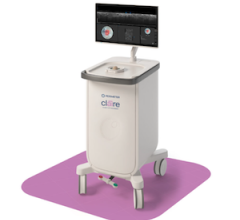
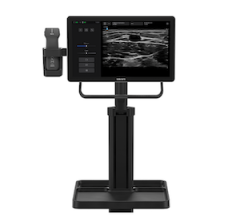
Two examples of CT myocardial perfusion (CTP) imaging assessment software. Canon is on the left and GE Healthcare is on the right. Both of these technologies have been around for a few years, but there have been an increasing amount of clinical data from studies showing the accuracy of the technology compared to nuclear imaging, the current stand of care for myocardial perfusion imaging, and cardiac MRI.
March 16, 2020 — The Society of Cardiovascular Computed Tomography (SCCT) released a new expert consensus document on computed tomography (CT) myocardial perfusion (CTP) imaging. The 2020 guideline, a result of a consensus statement of experts in the field, was published today in the Journal of Cardiovascular Computed Tomography. The new recommendations outline the use of both coronary anatomy and myocardial perfusion to help identify those patients who might most benefit from further invasive procedures to treat their coronary artery disease.
“CT perfusion has been developed and significantly validated over the last decade; however, its adoption into clinical practice has been limited by the lack of standardization and other factors. This international expert consensus group was comprised of a diverse group of individuals with significant experience in CT perfusion imaging and were tasked to identify some of the key principles that unify the various approaches to CTP,” said writing group co-chair Amit Patel, M.D., FSCCT of University of Chicago.
There is a growing body of evidence that establishes the diagnostic accuracy and incremental value of myocardial CTP over coronary CTA. In single center studies, myocardial CTP imaging has demonstrated high accuracy when compared with single photon emission computed tomography (SPECT), cardiovascular magnetic resonance (CMR), invasive coronary angiography (ICA), positron emission tomography (PET), and invasive fractional flow reserve (FFR). Multicenter studies have also established the accuracy of combining myocardial CTP with coronary CTA. These studies suggest that CTP is particularly accurate when interpreted in the context of coronary CTA findings.
The new consensus statement provides expert consensus regarding the performance and interpretation of CTP, including patient selection, image acquisition, post-processing, and interpretation of CTP results.
“The combination of coronary CTA and CTP can be used to detect both coronary atherosclerosis as well as its physiological consequences. While further studies will continue to refine the capabilities of CTP, the current expert consensus statement will be useful for clinicians and researchers who are interested in adopting this technique,” says writing group co-chair Ron Blankstein, M.D., MSCCT, of Brigham and Women's Hospital and SCCT president.
This consensus document on CT myocardial perfusion imaging includes:
• Recommendations for when myocardial CTP may be useful and who should be performing myocardial CTP imaging
• Recommendations for safe use of pharmacologic stress agents in the CT environment
• Recommendations on image acquisition and interpretation of CTP
• Recommendations for reporting CTP results
The recommendations were written by 12 experts and based on the level of consensus: strong (≥9 in agreement), moderate (7-8) and weak (6). Recommendations with less than six of the author group in support of the statement were not adopted into the 2020 expert consensus document.
Read the SCCT expert consensus document on computed tomography (CT) myocardial perfusion (CTP) imaging.
VIDEO: The State of CT Myocardial Perfusion Imaging — Interview with Gianluca Pontone, M.D.,
read the related article CT Perfusion Imaging Ready for Mainstream.
For more information: www.SCCT.org

 October 07, 2026