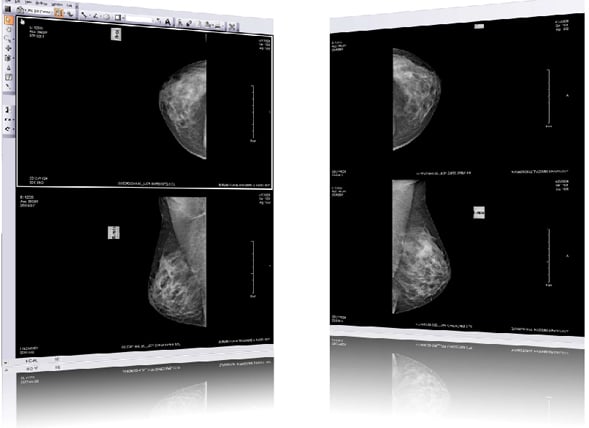
November 10, 2016 — The 2016 annual meeting of the Radiological Society of North America (RSNA 2016) is fast approaching and you’re frantically gathering your list of picture archiving and communication system (PACS) vendors to visit during your limited time at the conference. With so many vendors out there how do you make the best use of your time to ensure it’s well spent? Simple, just consider the following when narrowing down your list to ensure manageable and productive meetings. Here are 11 things you should consider when purchasing a PACS:
1. What do you like about your current system?
You’ve likely asked yourself and others within your group, “What features can we not live without?” Compile a list and rate them on a scale of most important to least important. Keep this list in mind when visiting different PACS vendors, as there may be some items you could live without in exchange for the productivity and technology enhancements that may come with another vendor.
2. What do you dislike about your current system?
While I’m sure you deal with complaints about your current system every day, engage your colleagues and put together a list. Turn their complaints into constructive feedback to help you choose the ideal PACS.
3. What are your annual support fees?
Many vendors have exorbitant annual support fees and some charge extra for software upgrades on top of it. Be wary of vendors with incredibly low fees because it could mean that they’re unable to afford the support staff necessary to address your needs. Instead, look for vendors with reasonable fees that include help desk support, software updates (patches, etc.) and upgrades, including major version releases.
4. Is the PACS vendor neutral?
Does their PACS store DICOM images in a vendor-neutral fashion that’s easily retrievable? This is very important as you may change vendors again down the road, and you do not want to have migration headaches.
5. How long has the vendor been in business?
PACS is a very competitive market. Look for vendors that have been in business for at least 15 years and have good customer retention.
6. Does the vendor provide modality support?
Besides standard X-ray, ultrasound, magnetic resonance imaging (MRI) and computed tomography (CT), does the potential new vendor also include mammography that supports digital breast tomosynthesis, multiplanar reconstruction (MPR), positron emission tomography (PET)/CT fusion, etc.? Are these tools included with the system or are they add-ons that come with additional fees and support costs? Look out for hidden fees.
7. Is their PACS easy to use?
It’s all about productivity, ease of navigation, minimal mouse clicks and fast turnaround times. Make sure you’re getting the whole package.
8. Does the vendor offer scalability?
Whether you’re a small imaging facility or a large enterprise radiology group, you must choose vendors with scalability. Some vendors offer solutions that cover various practice sizes. The champions not only offer a broad spectrum of solutions, but also provide easy upgrades, such as going from PACS to radiology information systems (RIS)/PACS with a license change and some training, technology for unified worklist and parallel PACS.
9. Does the vendor offer integration capabilities?
Maybe your electronic medical record (EMR) is keeping pace with industry trends and technological advancements, but your PACS has fallen short. Look for a PACS vendor that has strong interfacing capabilities. Who are the EMR vendors they currently interface with? Does the vendor have their own interface development team or is it outsourced? Outsourcing often doesn’t provide the quality control and speed-to-completion necessary for a smooth deployment and rich experience for end-users.
10. Is the PACS built with the latest technology?
The last thing you want to do is implement your new system on the same or similar platform as the old. Many things have changed since your previous PACS investment, especially in technology, database, redundancy, disaster recovery and cloud services. Design your new implementation structure to move in a progressive direction, capitalizing on the best and most current technology with an innovative company.
11. Is the vendor innovative?
Look for vendors that are innovative. What enhancements are going into their software updates? Are they simply me-too-type changes to keep up with other vendors, or are they truly offering progressive enhancements and staying ahead of the curve?
For more information: www.ramsoft.com
Editor’s note: Al Kappel is the sales director for Ramsoft.

 September 09, 2026