News | Radiation Therapy | October 19, 2016

Multi-institutional analysis finds adding SRS to targeted therapy improves survival and overall outcomes compared to targeted therapy alone

stereotactic radiosurgery, EGFR-mutant non-small cell lung cancer, NSCLC, brain metastases, Yale Cancer Center analysis, ASTRO 2016

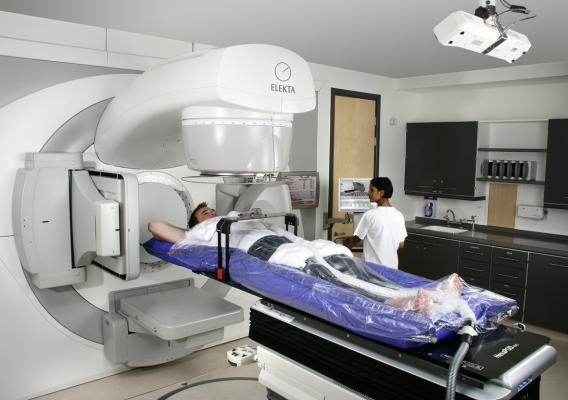
October 19, 2016 — A Yale Cancer Center team completed a multi-institutional analysis of treatment options for patients with newly diagnosed EGFR-mutant non-small cell lung cancer (NSCLC) with brain metastases to determine the best option for treatment. Stereotactic radiosurgery, in combination with targeted therapy using EGFR tyrosine kinase inhibitors, resulted in the longest survival and best outcomes for patients.

The findings were presented Sept. 26 at the American Society for Therapeutic Radiology and Oncology (ASTRO) meeting in Boston.

This study analyzed three current options by reviewing outcomes of 351 patients from six institutions with EGFR-mutant NSCLC who were treated with either stereotactic radiosurgery in conjunction with targeted therapy (100), whole brain radiotherapy in conjunction with targeted therapy (120), or targeted therapy alone followed by stereotactic radiosurgery or whole brain radiotherapy if salvage was required (131).

The multi-institutional analysis demonstrated that the use of targeted therapy alone with deferral of radiotherapy resulted in inferior overall survival. Stereotactic radiosurgery in conjunction with targeted therapy resulted in the longest overall survival for patients.

“Patients with advanced NSCLC that has newly spread to their brain have many treatment options today,” said Veronica Chiang, M.D., senior author on the study and an associate professor of neurosurgery and of therapeutic radiology at Yale School of Medicine. “Physicians need to feel confident that we know the best option and this study helps us to identify that. A randomized trial will be our next step.”

For more information: www.astro.org

Related Content

News | Women's Health

Nov. 3, 2025 — —A new radioimmunotherapy approach has the potential to cure human epidermal growth factor receptor 2 ...

Time November 04, 2025
arrow
Feature | Kyle Hardner

Radiotherapy contributes to about 40% of all cancer cures but still lags behind systemic therapy in funding and ...

Time October 21, 2025
arrow
News | Stereotactic Body Radiation Therapy (SBRT) | American Society for Radiation Oncology

Sept. 29, 2025 — A new clinical trial report finds that stereotactic radiation therapy offers long-term survival ...

Time October 15, 2025
arrow
News | Proton Therapy

Sept. 28, 2025 — Leo Cancer Care has launched Grace, the company's upright photon therapy system. Grace is named after ...

Time October 03, 2025
arrow
News | Radiation Therapy | American Society for Radiation Oncology (ASTRO)

Sept. 29, 2025 — Radiation therapy may offer a comparable and potentially safer alternative to repeat catheter ablation ...

Time September 30, 2025
arrow
News | Radiation Therapy

Sept. 26, 2025 – Accuray Inc. has introduced the Accuray Stellar* solution. Initially for the U.S. market, the new ...

Time September 29, 2025
arrow
News | Computed Tomography (CT)

Sept. 26, 2025 — At the American Society for Radiation Oncology (ASTRO) 2025 annual meeting in San Francisco, Calif ...

Time September 29, 2025
arrow
News | Lung Imaging

Sept. 26, 2025 ― Researchers from the University of Texas MD Anderson Cancer Center will present new data at the ...

Time September 29, 2025
arrow
News | ASTRO

Sept. 26, 2025 — Artera, the developer of multimodal artificial intelligence (MMAI)-based prognostic and predictive ...

Time September 29, 2025
arrow
News | Radiation Therapy

Sept. 25, 2025 — GE HealthCare has announced updates to Intelligent Radiation Therapy (iRT), a new version of the ...

Time September 25, 2025
arrow
Subscribe Now