March 30, 2016 — Philips Healthcare introduced the first commercially available magnetic resonance (MR)-only simulation solution indicated for prostate cancer radiation oncology treatment planning in the United States. Philips has achieved 510(k) clearance from the Food and Drug Administration (FDA) for its MRCAT (Magnetic Resonance for Calculating ATtenuation) solution as part of its Ingenia MR-RT platform. This imaging approach supports radiation departments that want to rely on MRI as their primary imaging modality for prostate cancer treatment planning.
Prostate cancer is the most common cancer among American men, causing approximately 27,540 deaths annually.[1] Approximately 1 million U.S. patients[2] undergo radiotherapy annually, and imaging plays a vital role. Current clinical practice often uses a combined approach using both MR and CT images, but this can lead to image misalignment and registration uncertainties that could impact targeting and treatment. It also puts pressure on patient burden, workflows and costs. MR-only simulation not only alleviates additional scans for the patient, but improves physician workflow and could potentially reduce provider costs, as compared to MR-CT workflow.
“Successful cancer treatment depends on the quality and accuracy of the radiation therapy plan, making imaging a critical piece in determining course of treatment,” said Rodney Ellis, M.D., vice chairman of radiation oncology at the University Hospitals Seidman Cancer Center. “The real power of MR-only simulation is that it enables us to develop personalized treatment plans. It can also streamline our workflows, which in turn reduces the burden on prostate cancer patients and the health system. Moreover, it can eliminate the systematic errors introduced by MR-CT registration.”
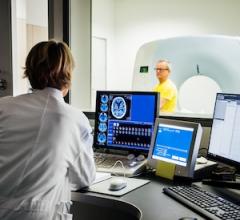
As part of its Ingenia MR-RT platform for MR simulation, Philips’ new MRCAT solution allows physicians treating prostate cancer patients to adopt a single-modality imaging approach that provides high quality soft-tissue contrast for target delineation, as well as density information for dose calculations. To produce the density information standard for CT, Philips has integrated fast and robust imaging protocols to obtain CT-like images on the MR console. Philips’ MR-only simulation solution has also received CE mark and is available globally.
“MR-only simulation is a continuation of Philips’ commitment to driving image-guided therapy in the market. Where CT solutions have played a leading role in past radiotherapy treatments, MR takes an innovative approach by providing physicians with increased soft-tissue visualization and functional imaging capabilities to help improve treatment plans,” said Lizette Warner, Ph.D., manager of clinical science MR therapy, North America, Philips. “MR-only simulation makes MR more accessible for hospitals and physicians, transforming the way care is delivered and supporting our customers in improving care for oncology patients who require radiotherapy.”
Philips’ radiation oncology solutions work along the health continuum to improve patient care, provide excellent value and expand access to care. Through collaboration with clinicians, Philips is able to fully integrate the imaging, simulation, planning and therapy tools required for delivering efficient and personalized radiation oncology care to patients.
Philips Radiation Oncology Systems (PROS) allows clinicians to move from scan to plan right at the CT console, with the enhanced Tumor LOC v4.2 virtual simulation and patient marking application enabled by the integration of Pinnacle3 and Brilliance CT Big Bore:
• Brilliance CT Big Bore – Focusing on what matters most in radiation oncology, Philips Brilliance CT Big Bore delivers high quality imaging while enabling personalized dose based on the clinical needs of patients. Designed to meet the specific needs of radiation oncology and CT simulation, Philips’ CT solutions focus on accuracy, patient positioning, imaging performance and a radiation therapy process that integrates seamlessly with clinical workflows, keeping the patient at the center of everything.
• Pinnacle3 Auto Planning – Recognized as a treatment planning system for external beam radiotherapy, this system provides accuracy and reliability independent of the treatment delivery system. With enhanced efficiency and standardization, Pinnacle³ Auto-Planning makes the IMRT planning process faster, less labor intensive and more reproducible.
For more information: www.philips.com/newscenter
References:
1. American Cancer Society, Key Statistics for Prostate Cancer, 2016
2. IMV, 2014 Radiation Therapy Market Summary Report

 October 05, 2026