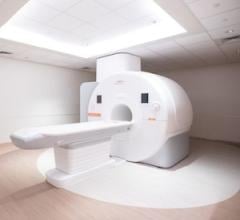
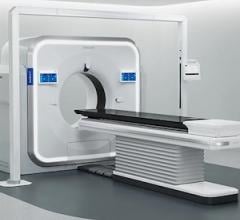
Siemens’ 510(k)-pending Simultaneous Multi-Slice speeds up acquisition by a factor of three, making advanced MR applications routine. (Image courtesy Siemens Healthcare)
Boxes aren’t cutting it any more in radiology. Who’s impressed today by the 23 hundredth-of-a-second rotating gantry; the wide bore, ultra-short 3T; the X-ray detector without cabling? I am. But not many others.
It’s more than a “What have you done for me lately” problem. In fact, it’s not a “what” problem at all. It’s “why” — why radiology does what it does. Today it’s all about the patient. But it didn’t used to be.
In the early years of radiology, there was a kind of naiveté that came from success in narrow bands. This was obvious with the glamour twins of imaging, computed tomography (CT) and magnetic resonance (MR). Slice wars propelled one generation of CTs to the next: 4 to 8 … 8 to 16 … 16 to 32 … 32 to 64. In MR, allegiance to 1.5T fueled new offerings. A fling with low-field open fizzled when the jump to high-field fell short and wide bore cylinders took over.
The realization that radiology had plateaued was clear when generation X machines went beyond the routine needs of radiology, delivering 128-plus slices and 3T. Radiology began to question the supremacy of the box. Patient concerns and efficiency took over.
Low-dose CT, radiography and fluoro are staples of radiologic modernity. Nobody talks anymore about SAR (specific absorption rate). That was a problem in 3T scanning, but engineers solved it. If the advanced MR protocols shown at this year’s RSNA pan out, scan times could drop to 10 or even five minutes for the brain and from 30 to 10 minutes for complex body and heart cases.
Unquestionably, there is plenty left to do, much of it in the culture of radiology. Only about one in five practicing radiologists in the United States are women. Equality fares even worse when it comes to women in leadership positions. Of radiologists who are chairs, presidents, vice chairs or board members of their radiology groups, women account for only 15 percent.
There is reason to hope the future will be more equitable. After all, radiology has thrust the patient before the box. It has done so while staying in character — reinventing itself with technologies inserted like nucleic snippets into its DNA.
Spectral and dual-energy CT describe the chemical romance between tissues and disease. Ultrasound has gotten smaller, lighter, easier to operate, eminently programmable and exquisitely adapted to patient needs. The steak-and-potatoes hybrid of positron emission tomography (PET) and CT is beginning, in some instances, to cede its position to the steak-and-broccoli combo of PET and MR that delivers similar clinical results without the ionizing radiation of CT.
The box got us here. But it is no longer about the box. It is about what the box can do. And that makes me a little sad.
I loved the simple days, when progress was expressed in technological hops. I feel them in the almost imperceptible hum of the CT gantry circling the patient, transferring data through its optical links — successor to the slip rings, which replaced the cabling that held the gantry in check like the leash on a 90-pound Bull Terrier repeatedly lunging forward and being pulled back. I see them in the vibrating MR gradient coils — tamed, in some cases, to the point that the bizarre noises they emit can be barely heard. I feel them in today’s successor to the X-ray Bucky — vessel for film turned into a case for electronic circuitry, tethered to an operator’s console, now wireless … free … once again.
It’s hard to let go, to look beyond these boxes, to the greater purpose of radiology. But it’s time.
It has become all about the patient.
Editor’s note: This column is the culmination of a series of four blogs by industry consultant Greg Freiherr on The Evolution of Radiology. The blogs, "Radiology Faces Frightening New World," “Imaging’s Evolution Fulfills Patient-centric Destiny,” “Radiology’s Evolution Leaves Women Behind” and “It’s All About the Patient” can be found here.

 October 08, 2026