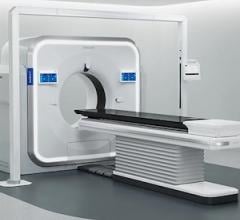
July 22, 2015 - To observe the brain in action, scientists and physicians use imaging techniques such as functional magnetic resonance imaging (fMRI) to observe physiological modifications to the cerebral region of activated neurons. Until now, it was believed that these differences were only due to modifications of the blood influx towards the cells. By using intrinsic optical signals (IOS) imaging, researchers from the University of Geneva (UNIGE), Switzerland, demonstrated that, contrary to what was thought, another physiological variation is involved: the activated neurons swell due to the massive entry of water. This discovery provides evidence that a much finer analysis of the functioning of the brain - and of its dysfunctions - is possible. These results are published in the journal Cell Reports.
Mainly two types of brain imaging techniques are used to determine which cerebral areas are stimulated during a given activity. One of them is fMRI, which reflects the change of oxygen level and variations of the blood flow in the excited regions. The localization of these areas is based on a phenomenon termed "BOLD" (Blood Oxygen Level Dependant), related to the magnetic properties of hemoglobin, which vary according to its state of oxygenation.
The other technique, IOS imaging, detects modifications of light refraction on cerebral cells in action, by recording a lesser luminous intensity in the activated zones. This method is used as an alternative to fMRI, in particular when a magnetic field may disrupt the examination. Until now, scientists thought that this modification of light behavior was also due to hemodynamic changes.
Alan Carleton, professor at the Department of Fundamental Neurosciences of the Faculty of Medicine of UNIGE, uses IOS imaging to observe the functioning of the olfactory bulb. "We obtain highly contrasted images in answer to an odor, because thousands of nose sensory cells expressing the same olfactory receptor converge on a very small volume in the brain. We were however surprised to observe that, if the signals are visible immediately after emission of the sensory stimulus, the flow of blood is altered only more than one second later," explained the scientist. The temporal gap is important enough to confirm that, contrary to a well-established consensus, the detected signal has no hemodynamic origin.
What is the cellular origin of the signals? In collaboration with the team of Ivan Rodriguez, professor at the Department of Genetics and Evolution of the Faculty of Science of UNIGE, the electric activity of the various cells involved in response to odors was studied. This was done with mice genetically modified so that each type of cell of the olfactory bulb becomes fluorescent when stimulated. "We did not find any signal related to a change in hemoglobin oxygenation. However, we observed a signal emitted by the sensory neurons themselves, in response to their own electric activity," said the researcher.
What does this signal reflect? The researchers discovered that it is in fact caused by the entry of water into the activated neuron, at the level of its axon, the "cable" through which the electric impulse propagates towards another cell. Besides, they demonstrated that the imaging signal - the flow of water into the axons - is directly coupled with the electric activity. "We observe a mechanical and immediate effect of neuron activation, rather than a modification of the blood flow afterwards," noted Carleton. "Thus, we avoid the uncertainties of interpretation of the signals related to the blood flows, which, being delayed and acting more globally on the cerebral region studied, do not exactly reflect the activated area. "
Water movements observed thanks to IOS imaging can be also detected by fMRI. The Genevese scientists provide henceforth the proof of the cellular mechanism at work, thus demonstrating the potential of this method. "Both types of imaging technique converge: observing the movements of water, rather than examining the oxygenation of blood, improves the localization of active neurons and allows to detect potential pathologies. The problem does not lie in the fact of observing a signal, but of determining its origin, to be able to interpret what we see," concluded Rodriguez.
For more information: www.unige.ch

 October 08, 2026