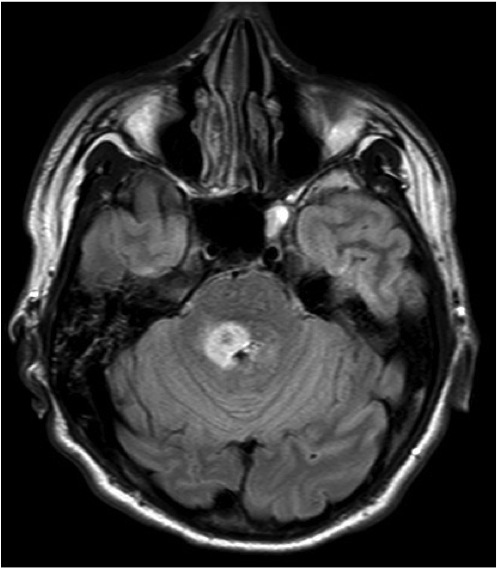
May 6, 2015 — Leksell Radiosurgery Award winner Deborah C. Marshall presented her research, “Survival Patterns of Patients with Cerebral Metastases after Multiple Rounds of Stereotactic Radiosurgery” (SRS), at the 2015 American Association of Neurological Surgeons Annual Scientific Meeting.
With escalating focus on cost containment, there is increasing scrutiny on the practice of multiple rounds of SRS for patients suffering from subsequent brain metastases distant to the initial site. A major concern is that such recurrence may be a prognostic indicator of poor overall survival.
Marshall’s study retrospectively analyzed outcomes of 801 patients with 3,683 brain metastases from primary breast, colorectal, lung, melanoma and renal cancers consecutively treated at the University of California, San Diego/San Diego Gamma Knife Center (UCSD/SDGKC). The analysis compared the survival pattern of patients who underwent a single round (n=643) versus multiple rounds (n=158) of SRS for subsequent brain metastases. Multivariate analyses were performed to control for known prognostic variables, including age, Karnofsky performance status, number of metastases, cumulative tumor volume and systemic disease status.
No significant difference in median survival from the time of final round of SRS was found for patients undergoing one, two, three or >four rounds of SRS (median survival of 167, 202, 129 and 127 days, respectively, p=0.49).
Median intervals between treatments consistently ranged from 140 to 178 days, irrespective of rounds of SRS (p=0.25). Patients who underwent multiple rounds of SRS tended to be younger, have achieved systemic disease control, harbor lower cumulative tumor volume but have an increased number of metastases (p-values <0.001, <0.001, <0.001 and 0.02, respectively). Multivariate analysis of pertinent clinical variables revealed that additional rounds of SRS did not significantly influence overall survival (p<0.001).
For judiciously selected patients, median overall survival was comparable for brain metastases patients who underwent single or multiple rounds of SRS. The decision of whole brain radiation therapy (WBRT) versus multi-round SRS should be tailored to the clinical condition of patient based on judgment of the treating physician.
For more information: www.aans.org
 October 07, 2026