October 7, 2014 — Seno Medical Instruments Inc. announced it has completed active enrollment of subjects in its U.S.-based PIONEER Pivotal Study of Imagio. The study was designed to determine if this technology will provide information to the physician to determine if a woman may avoid negative biopsies. This information will serve as the basis for the company's Premarket Approval Application (PMA) with the U.S. Food and Drug Administration (FDA).
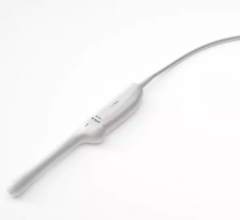
Seno's Imagio fuses opto-acoustics, a technology based on "light-in and sound-out," with diagnostic ultrasound. The opto-acoustic images provide a unique blood map in and around suspicious breast masses. Cancerous tumors grow relatively quickly and require significant amounts of blood and oxygen, so a network of blood vessels grows around cancerous masses. Imagio provides images of these networks and a map of relative oxygen-rich or oxygen-deprived blood. Unlike other functional fusion technologies, Imagio uses no X-rays (ionizing radiation) or injectable contrast agents to obtain its information, thereby reducing the patient's exposure to any potentially harmful aspects of imaging.
"There is a significant unmet medical need for more accurate diagnostic imaging technologies to help physicians confirm and rule out breast cancer before the patient has to undergo an invasive procedure. More information at the imaging stage could help us make more informed decisions regarding whether we should send the patient for a surgical or needle biopsy," said Reni Butler, M.D., assistant professor of diagnostic radiology at the Yale School of Medicine in New Haven, Conn., and the co-principal investigator for the study.
Imagio was designed to identify two functional hallmarks of a potential malignancy: the presence of abnormal blood vessels (angiogenesis) and the relative reduction in oxygen content of hemoglobin. The technology is non-invasive and does not require contrast agents or radioisotopes, which are required for other modalities such as magnetic resonance imaging (MRI) or positron emission tomography (PET), nor does it use ionizing radiation (X-ray).
"Earlier data from a feasibility study of Imagio led to encouraging results and we look forward to seeing the outcomes from this pivotal study. If the results are consistent with the earlier, smaller studies, we believe this could be an important new technology to help improve the diagnosis of breast cancer and allow many women with benign lesions to have short-interval Imagio follow-up and avoid a biopsy," said co-principal investigatorErin Neuschler, M.D., Northwestern Medicine radiologist and assistant professor of radiology at Northwestern University Feinberg School of Medicine in Chicago.
The Imagio study was conducted in 16 leading institutions throughout the United States with more than 2,100 subjects enrolled. The study was designed to measure the sensitivity and specificity of Imagio compared to Imagio grayscale ultrasound imaging in breast lesions using the probability of malignancy (POM). Subjects who enrolled in the study underwent a traditional ultrasound and an Imagio scan. Physicians only used traditional ultrasound findings to determine if the subject should advance to the biopsy phase. The Imagio results were later interpreted by an independent reader panel. Subjects who had a negative diagnostic ultrasound will be re-evaluated 12 months after their initial examination to confirm the negative results as a true negative.
"Completing active enrollment is a significant milestone in Seno's efforts to commercialize Imagio. We developed Imagio with the goal of reducing the number of imaging tests and invasive procedures women currently have to undergo to learn if a suspicious breast mass is cancerous or not. We would like to thank our investigators and their dedicated teams for participating in this important study. We hope Imagio will have a significant impact on the diagnosis of breast cancer in the future," said Janet Campbell, CEO of Seno Medical Instruments.
For more information: www.SenoMedical.com
 October 09, 2026