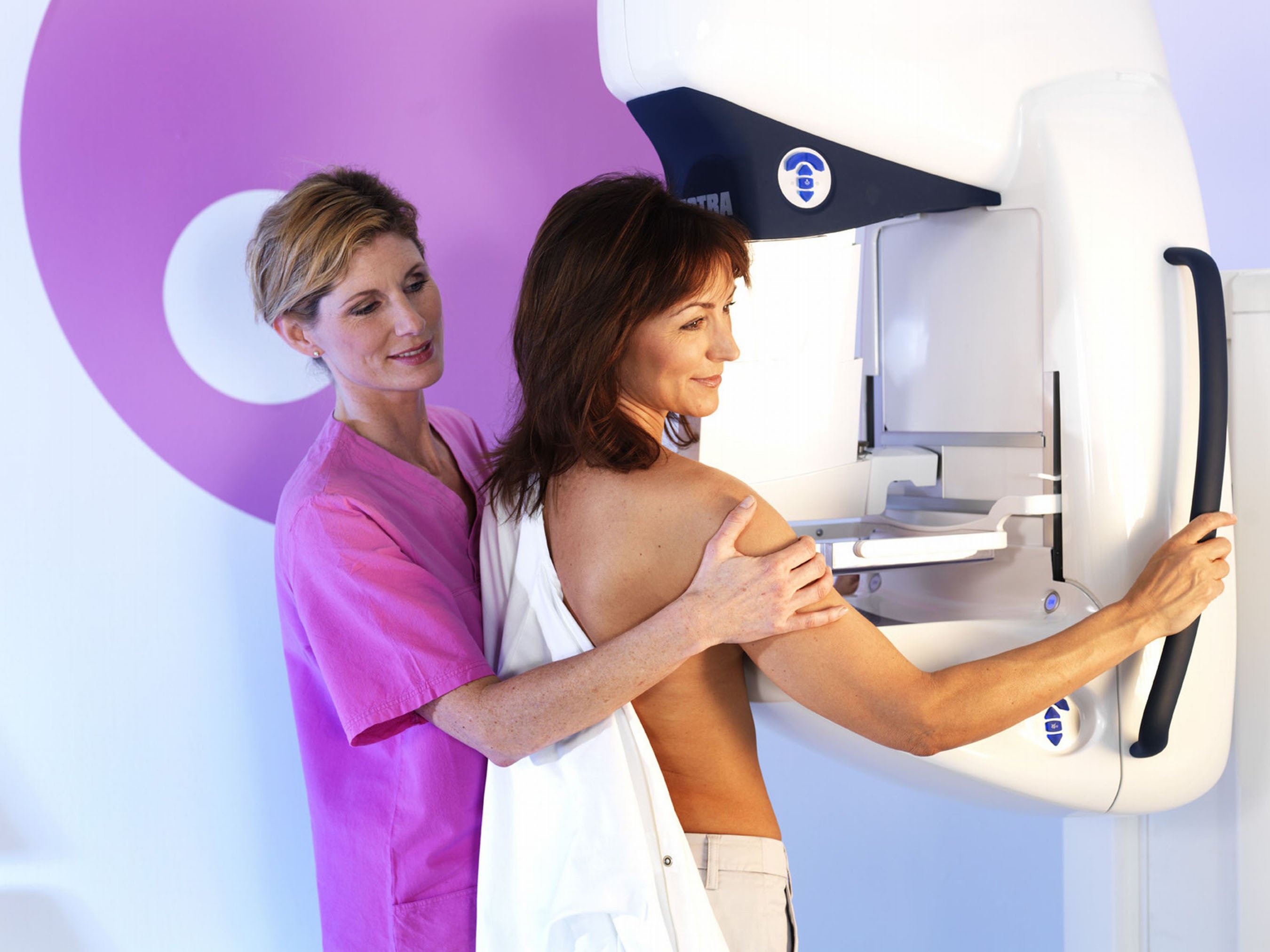
May 14, 2013 — Digital direct radiography (DR) is significantly more effective than computed radiography (CR) at detecting breast cancer, according to a new study published online in the journal Radiology.
The findings are the first to show a difference between the two types of digital imaging when compared with screen film mammography and suggest that women should be informed of the potential for lower cancer detection with CR, the researchers said.
Digital mammography, which takes an electronic image of the breast that can be stored and sent electronically, has supplanted screen film mammography in recent years.
DR and CR are the two types of digital mammography offered. DR is an online system in which the detector is an integral part of the mammographic unit, and the digital image can be read by the system in real time. CR is an offline system that relies on a cassette-based removable detector. An external reading device is used to generate the digital image.
While numerous studies have been published comparing digital mammography with screen film mammography, less is known about the comparative effectiveness of DR and CR, according to Anna M. Chiarelli, Ph.D., senior scientist in prevention and cancer control at Cancer Care Ontario in Toronto, Canada.
“Digital mammography was implemented progressively in Ontario starting in 2006, and since that time there’s been no evidence in the literature to suggest that CR did not perform as well as DR,” she said.
For the new study, Chiarelli and colleagues drew upon information from the Ontario Breast Screening Program (OBSP), initiated in 1990 to deliver breast screening to women between the ages of 50 and 74. The researchers identified three groups of women 50 to 74 years old who were screened between Jan. 1, 2008, and Dec. 31, 2009. A total of 403,688 women were screened by screen film mammography, while 220,520 had DR and 64,210 underwent CR. The women were followed for 12 months after screening.
DR detected 4.9 cancers per 1,000 mammograms, a figure almost identical to screen film mammography’s rate of 4.8 cancers per 1,000 mammograms. However, CR’s detection rate of 3.4 cancers per 1,000 mammograms was significantly lower.
“CR was 21 percent less effective than DR,” Chiarelli said. “This could result in about 10 fewer cancers detected per 10,000 women screened.”
The reason for the lower detection rates likely can be attributed to technical factors.
There may be several technical reasons reported by others for the lower effectiveness of CR, including loss of spatial resolution, or sharpness, and increased image noise, or granularity,” she said.
Fore more information: radiology.rsna.org
 October 09, 2026