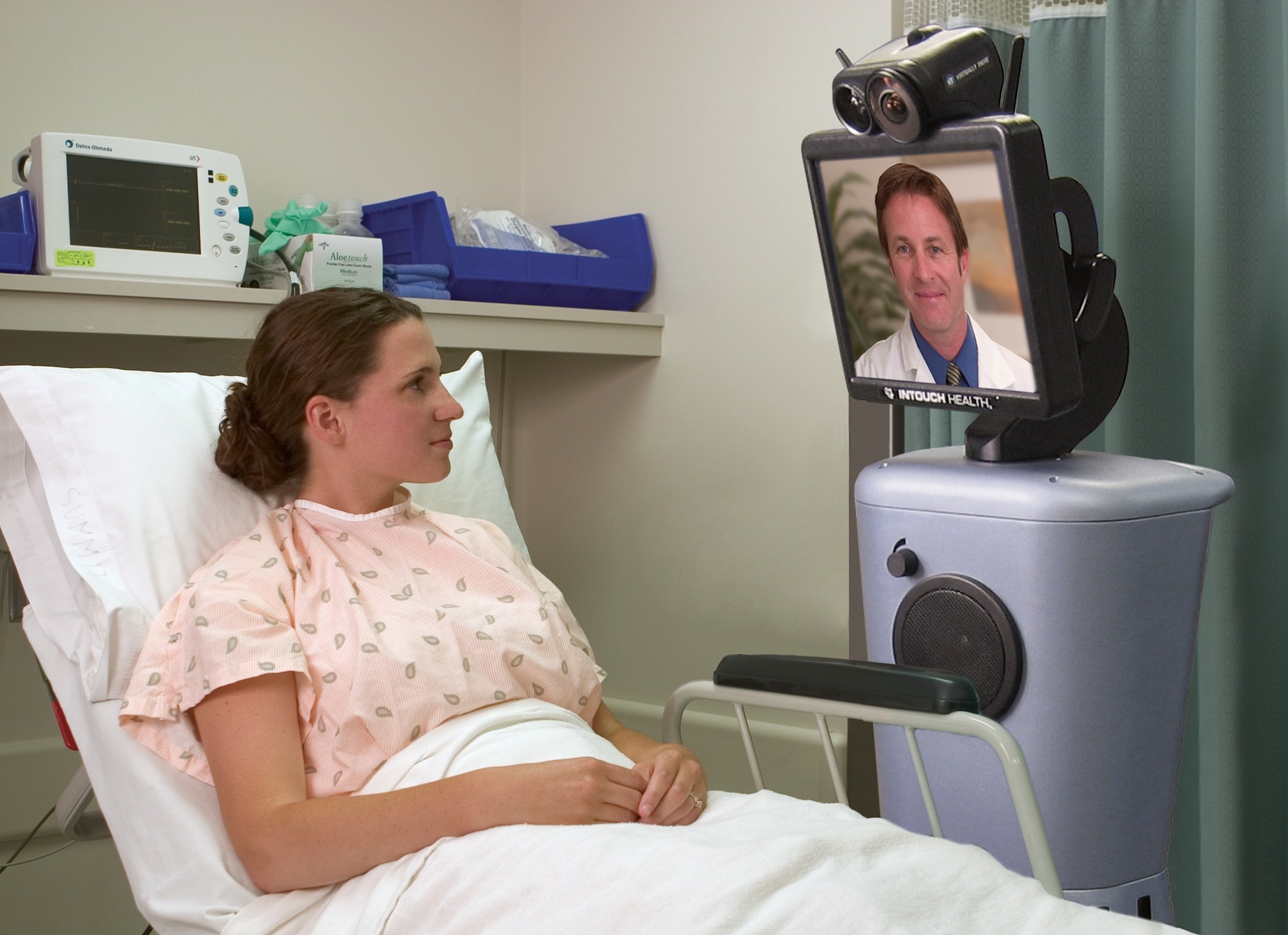
February 22, 2013 — Artificial intelligence may be an ingredient in the future practice of medicine, where computers will offer their medical advice to human physicians on patient cases. While it sounds like science fiction, the roots of this technology are already in use today with computer aided detection (CAD) systems to help detect lung, breast and colon cancers on images. Another form is clinical decision support (CDS) software, which determines if a patient qualifies for a particular test or procedures based on appropriate use criteria. Going a step beyond these types of second opinion software is an effort to train a computer to think like a physician and make much more complex clinical decisions.
The March 2013 issue of The Atlantic, out this week, includes the article “The Robot Will See You Now,” which looks at how IBM's Watson — the same machine that beat Ken Jennings on Jeopardy — is now churning through case histories at the Memorial Sloan-Kettering Cancer Center, learning to make diagnoses and treatment recommendations. This is one in a series of developments suggesting that technology may be about to disrupt health care in the same way it has disrupted so many other industries. The story asks the questions if doctors are necessary and just how far might the automation of medicine go?
Computers offer the ability to analyze far more data in an empirical fashion than the human mind, which might be able to overcome some of the bias and details that might be overlooked by human doctors.
Drawing on his own clinical experience and on academic studies, Marty Kohn, an emergency-room physician and a clinical leader of the IBM team training Watson for healthcare who was interviewed for the article, explained about one-third of errors made by doctors appear to be products of misdiagnosis. He said one cause of this is “anchoring bias.” Which is the human beings’ tendency to rely too heavily on a single piece of information. This happens all the time in doctors’ offices, clinics, and emergency rooms. A physician hears about two or three symptoms, seizes on a diagnosis consistent with those, and subconsciously discounts evidence that points to something else. Or a physician hits upon the right diagnosis, but fails to realize that it’s incomplete, and ends up treating just one condition when the patient is, in fact, suffering from several. Tools like Watson are less prone to those failings. As such, Kohn believes, they may eventually become as ubiquitous in doctors’ offices as the stethoscope.
“Watson fills in for some human limitations,” Kohn told The Atlantic. “Studies show that humans are good at taking a relatively limited list of possibilities and using that list, but are far less adept at using huge volumes of information. That’s where Watson shines: taking a huge list of information and winnowing it down.”
Cleveland Clinic is also helping to develop Watson, first as a tool for training young physicians and then, possibly, as a tool at the bedside itself. The insurance company WellPoint has also begun testing Watson as a support tool for nurses who make treatment-approval decisions.
To read the full Atlantic article, visit www.theatlantic.com/magazine/archive/2013/03/the-robot-will-see-you-now/309216/
 September 09, 2026