Sponsored by PACSGEAR
University of Wisconsin-Madison Hospital and Clinics is a 471-bed facility that ranks among the finest academic medical centers in the United States. It is recognized as a national leader in several fields.
To facilitate better information sharing among practitioners, the facility needed to import JPEG images from digital cameras and other video sources. By converting JPEGs to DICOM visible light images and including them in its McKesson PACS, the Madison, Wisconsin-based hospital could eliminate “image silos” and improve clinical care processes. With more than 1,000 PACS workstations used by more than 1,400 medical staff, the facility had encountered multiple sources of non-DICOM visible light images, but had limited options to consistently convert them to DICOM and import them into PACS.
Reliably importing images can lead to several challenges, including physically dispersed locations and storage of non-DICOM files, difficulties in populating patient demographics accurately, and inconsistencies by staff while importing these images into PACS. Dr. Gary Wendt, vice chair of informatics, professor of radiology and enterprise director of medical imaging at UW Madison, addressed these challenges by using the JPEG import features found in PACSGEAR’s flagship software, PacsSCAN.
From Inconsistent Workflow to Streamlined Workflow
UW Madison Hospital and Clinics had non-DICOM image sources from departments such as dermatology, pulmonology and ENT, but lacked uniform means to import the images into PACS with appropriate DICOM header information and patient demographics.
Previously, staff had resorted to capturing images based on different source formats. This not only led to dispersed image silos that were inconsistently imported into PACS, but also posed technical support issues in a multi-vendor environment. Before installing PacsSCAN, Dr. Wendt’s team had no consistent way to consolidate images previously printed to paper, stored on jump drives or even misplaced in drawers.
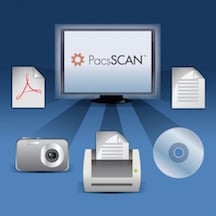
UW Madison Hospital and Clinics sought a vendor-independent solution that would consistently convert JPEGs and other image types, such as MPEGs and AVIs, to DICOM. The solution had to be simple enough for staff to use regularly and be available wherever images were generated. Streamlining their workflow would ensure that all prior images would be accessible in PACS.
PacsSCAN Enables Visible Light Workflow
PacsSCAN’s performance and features met Dr. Wendt’s requirements. Now, DICOM visible light images are imported as DICOM images for access during diagnosis. For sites like UW Madison, PacsSCAN can bring consistency and thoroughness to DICOM visible light image import by centralizing prior images and enhancing diagnosis and followup. Distributing PacsSCAN to the point-of-care improved the ease and speed of departmental workflows.

 September 09, 2026