
At RSNA 2010, eMix will display several solutions for electronic medical information exchange. Cloud Computing eMix is a cloud computing-based technology. The customer purchases the service on a per-use basis, thus avoiding substantial capital, management and maintenance costs. There is no hardware, software or maintenance contract to purchase. Some medical institutions using eMix do not even have picture archiving and communication systems (PACS), the standard technology for viewing, storing and distributing digital imaging data. Physicians can also download imaging exams via eMix for storage in their electronic medical records (EMR) inbox. Wider access to high-speed Internet has made eMix a highly feasible solution for medical facilities, physician offices and patients alike. Finally, economic pressures have made cloud-based solutions far preferable to older, more costly solutions to the medical image-sharing problem such as burning and shipping CDs or DVDs, or transmitting via virtual private networks (VPNs). Security Medical institutions that exchange data must do so securely to comply with HIPAA requirements, as well as their own internal confidentiality policies. eMix has eight layers of healthcare IT security that together enable institutions to achieve secure data sharing. The layers are: • Physically Secure Data Center: Can only be accessed by authorized personnel only after biometric verification. • Network Access Security: Restricts network access with a double, cumulative layer of firewalls. • Member Verification: Only verified members of authorized institutions can become users. • User Authentication: Verified users must create complex passwords to gain access. • SSL 3.0/TLS 1.0 Encryption Data Transmission: Ensures that data in transit is virtually indecipherable if intercepted. • Data Redundancy and Retention: eMix data resides on multiple redundant content servers, database servers and web servers at the data center. • Auditing: All transactions between eMix clients and servers are auditable. Any data lost because of a failure at the user institution can be recovered from the central server. • New Recipient Confirmation: An eMix sender must verify the new recipient’s identity, confirm they have the correct email address and confirm the new recipient as legitimate. eMix vs. VPNs Like eMix, VPNs make it possible for medical institutions with disparate PACS to securely exchange radiology data over the Internet. However, they are ad hoc arrangements that connect only two facilities at a time. They are also labor- and capital-intensive to create and maintain. Here is how eMix and VPNs compare: • Labor and material costs: Setting up a VPN requires hardware and software acquisitions plus a time investment by an experienced IT technician. It also must be maintained by a technician. With eMix, there is no hardware or software to purchase and no maintenance required. • Universality: VPNs can only context two hospitals. In contrast, multiple facilities could exchange data with each other via eMix. • Security and privacy: VPNs give hospitals the ability to view unrelated data, not just the specific files of interest. eMix creates no such access. All user institutions’ internal networks remain private and secure. • Maintenance: VPNs create a significant maintenance burden that is magnified by the number of VPNs that must be serviced. There is no maintenance with eMix at all, as the provider maintains and upgrades the technology. For more information: www.emix.com
Related Content

Feature | Artificial Intelligence | Kyle Hardner
A radiologist pulls up a chest CT scan flagged for a pulmonary nodule. One artificial intelligence (AI) tool writes its ...
 September 09, 2026

Feature | Artificial Intelligence | Kyle Hardner
Could the era of the empowered patient change how imaging reports are structured and presented? It’s a question on the ...
August 03, 2026 
News | PACS
July 8, 2026 — Freeland Systems, a cloud PACS and clinical imaging software company, has launched its new customer ...
July 10, 2026 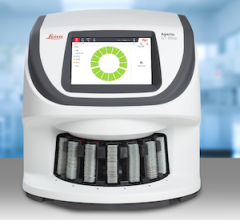
News | Digital Pathology
June 15, 2026 — Leica Biosystems is expanding the availability of its Aperio GT Elite digital scanner into the EMEA ...
June 15, 2026 
News | Imaging Software Development
June 10, 2026 — DeepHealth, Inc., a wholly owned subsidiary of RadNet, has launched Reporting Pro, an AI-powered ...
June 12, 2026 
News | Artificial Intelligence
April 20, 2026 — DeepTek, provider of the Augmento platform and deepc, the company behind deepcOS, have introduced a ...
April 23, 2026 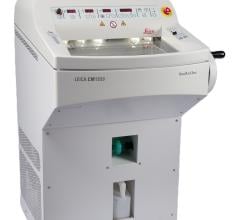
News | Digital Pathology
Feb. 11, 2026 — Leica Biosystems has announced the global launch of the Leica CM1950 Cryostat with DualEcoTec Cooling ...
February 11, 2026 
Feature | Cybersecurity | Kyle Hardner
As radiology practices shift toward cloud-based platforms and integrate AI-powered tools, will practices become more ...
January 14, 2026 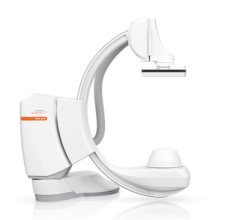
Nov. 30, 2025 — At RSNA 2025, Siemens Healthineers is presenting its new imaging chain Optiq AI1, which is powered by ...
December 01, 2025 
News | Archive Cloud Storage
Nov.18t, 2025 — Gradient Health recently announced its Atlas platform is now available on Google Cloud Marketplace ...
November 18, 2025 © Copyright Wainscot Media. All Rights Reserved.

Subscribe Now