September 22, 2009 - Robotic stereotactic radiotherapy appeared to be a safe and obviously superior alternative to conventionally fractionated radiotherapy in a small cohort of patients with stage I non-small cell lung cancer (NSCLC), according to a study published in the October issue of Clinical Oncology.
In the study, researchers set out to determine the effectiveness of robotic stereotactic radiotherapy with image guidance and real-time respiratory tracking against early stage peripheral lung cancer.
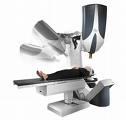
All patients with stage I non-small cell lung cancer (NSCLC) were treated using CyberKnife. All patients had co-morbid conditions that precluded lobectomy. The clinical target volume (CTV) included the gross tumour volume (GTV) and a 6 mm margin in all directions to account for microscopic extension. The planning target volume (PTV) equalled CTVD + 2 mm in all directions for uncertainty. Tumor motion was tracked using a combination of Synchrony and Xsight Spine tracking methods with the aid of a single gold marker implanted in the center of the tumor, or using the newer Xsight Lung method without markers for selected tumors. A 60-67.5 Gy dose was prescribed to the 60-80 percent isodose line (median 65 percent) and given in three to five fractions. Patients were followed every 3 months for a median of 27.5 months (range 24-53 months).
Of the 67 patients with NSCLC stage IA or IB treated between January 2004 and December 2008, investigators reported the results of a cohort of 31 with peripheral stage I tumors of 0.6-71 cm3 volume treated between January 2004 and December 2007 with total doses between 60 and 67.5 Gy in three to five fractions. The median Dmax was 88.2 Gy and the median V95 of the PTV was 99.6 percent or 27.9 cm3. No grade 3 or above toxicity was encountered. Four cases of radiation pneumonitis and one case of oesophagitis were observed. In those patients whose pre- and post-treatment results were available, no change in pulmonary function tests was observed. Actuarial local control was 93.2 percent for 1 year and 85.8 percent for up to 4.5 years. One-year overall survival was 93.6 percent and 83.5 percent for up to 4.5 years, as projected by Kaplan-Meier analyses.
The researchers concluded that in this small cohort of patients with stage I peripheral NSCLC, robotic stereotactic radiotherapy seems to be a safe and obviously superior alternative to conventionally fractionated radiotherapy, with results that may be approaching those obtained with lobectomy without the associated morbidity.
Reference: Brown, W.T., Wu, X., Fayad, F., Fowler, J.F., García, S., Monterroso, M.I., de la Zerda, A., Schwade, J.G. Application of Robotic Stereotactic Radiotherapy to Peripheral Stage I Non-Small Cell Lung Cancer With Curative Intent. Clin Oncol. 2009 Oct 1;21(8):623-631.
 October 01, 2026