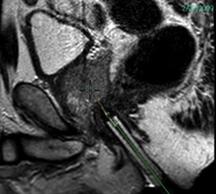
Fig. 1 Diffusion-weighted MRI image of the prostate gland.
Women worry about their own health, but are increasingly aware and educated about the health of their spouses, children and parents.
As September is Prostate Awareness Month, it is important for family members to understand the prevalence of prostate cancer, a disease that equated to an estimated 192,280 new cases and 27,360 deaths from prostate cancer in the United States in 2009, according to the American Cancer Society.
Dr. Jurgen Futterer, University of Nijmegen, says there are approximately 500,000 new prostate cancer cases worldwide, and in line with U.S.-statistics, about one in 35 will die from it.
A new technique for targeted localization of prostate lesions has been under development in Europe for over five years1 and is now available in the United States for select patients.
Similar to breast MR imaging and interventional capability, prostate cancer patients may be able to benefit from the high resolution of MR images and the ability to target, under MR-guidance, specific suspicious areas in the prostate2.
Currently, there are a number of patients that present with a persistent high or elevated PSA and or abnormal DRE, many of whom go on to multiple TRUS-guided biopsies with repeated negative results. In these situations, the patient and physician are without a diagnosis, and the patient is with a higher anxiety level.
Using MR images and biopsying under MRI-guidance minimizes the number of cores acquired by using true image guidance. The literature has shown that men with elevated or rising PSA or positive DRE with two, three, four or even more previous negative TRUS-guided biopsies may benefit from this approach3. So might men with suspicion of prostate cancer recurrence, detected through elevated PSAs following XRT, radical prostatectomy or other therapies.
MRI has a role in imaging and analysis of DCE prostate images as well as interventional planning, and is a way to further evaluate men with prostate cancer. Staging, node detection and evaluation of metastatic disease are areas where MRI has an evolving and important place4. Detection, localization and subsequent biopsy are possible in even outpatient environments (Fig. 1, Fig.2)5.
Urologists are very interested in solving the quandary of the patient with elevated or rising PSA and negative TRUS-guided biopsy. MRI can make a world of difference in these cases. As an emerging technique, it is easy enough to perform and is also well-tolerated by the patients who udergo it.
Bibliography
1. Beyersdorff D, Winkel A, Hamm B, Lenk S, Loening S, Taupitz M, MR Imaging-guided Prostate Biopsy with a Closed MR Unit at 1.5T: Initial Results, Radiology Vol. 234, No. 2, February, 2005:577-581
2. Aristotelis G. Anastasiadis, Matthias P. Lichy, Udo Nagele, Markus A. Kuczyk, Axel S. Merseburger, Joerg Hennenlotter, Stefan Corvin, Karl-Dietrich Sievert, Claus D. Claussen, Arnulf Stenzl, Heinz-Peter Schlemmer, MRI-Guided Biopsy of the Prostate Increases Diagnostic Performance in Men with Elevated or Increasing PSA Levels after Previous Negative TRUS Biopsies, European Urology, 50,2006: 738-749
3. Kirsten M. Pondman, Jurgen J. Fütterer, Bennie ten Haken, Leo J. Schultze Kool, J. Alfred Witjes, Thomas Hambrock, Katarzyna J. Macura, Jelle O. Barentsz, MR-Guided Biopsy of the Prostate: An Overview of Techniques and a Systematic Review, European Urology, Volume 54, Issue 3, September 2008, Pages 517-527
4. Hambrock T, Futterer J, Henkjan JH, Hulsbergen-vandeKaa C, vanBasten JP, vanOort I, Witjes JA, Barentsz JO, Thirty-Two-Channel Coil 3T Magnetic Resonance-Guided Biopsies of Prostate Tumor Suspicious Regions Identified on Multimodality 3T Magnetic Resonance Imaging: Technique and Feasibility, Investigative Radiology, Volume 43, Number 686 10, October 2008 , Pages 686-694
5. Feller JF, Greenwood BM, Jones W, Kaminsky DB, Walsh LP, European Society for Magnetic Resonance in Medicine and Biology, Use of trans-rectal interventional MRI (TRIM) for computer-aided prostate biopsy, Control Number 09-Cl-153-ESMRMB 2009

 October 23, 2026