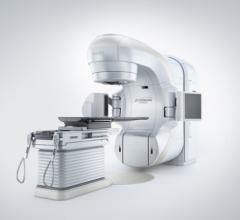
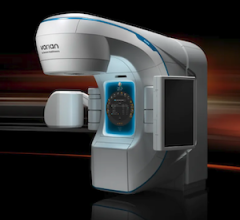
Varian Medical Systems offers the RapidArc radiotherapy technology, which is designed to deliver image-guided, intensity-modulated radiation therapy (IMRT) reportedly two to eight times faster and more precisely than conventional IMRT or helical tomotherapy.
RapidArc's volumetric modulated arc therapy delivers a complete IMRT treatment in a single rotation of the treatment machine around the patient. The two FDA clearances for RapidArc cover the treatment hardware and the RapidArc treatment planning software module in Varian's Eclipse treatment planning system. Varian will begin taking orders for RapidArc immediately and will begin delivering it to customers in the spring of 2008.
Clinicians can use RapidArc for prostate and head and neck treatments and still offer fixed beam IMRT treatments with motion management for lung and breast tumors and electron treatments for patients with lymphomas and skin cancers.
Studies comparing fixed-beam and helical IMRT with RapidArc show that RapidArc can reduce the amount of non-therapeutic radiation reaching healthy tissues during treatment. For example, in the case of head and neck cancer treatments, RapidArc plans are better at protecting critical structures like the spinal cord, brain stem, eyes, optic nerve and chiasm, parotid (salivary) glands and brain. Due to RapidArc's efficient use of the primary beam, secondary stray radiation caused by scatter and leakage are reduced by over 50 percent on average compared with fixed field IMRT.
RapidArc technology utilizes a proprietary algorithm that creates a finely-shaped IMRT dose distribution that closely matches the size and shape of the tumor. It works by varying three parameters simultaneously: 1) the speed with which the treatment machine rotates around the patient, 2) the dimensions of the beam-shaping aperture, which change continually during the treatment based on the patient's unique anatomy, and 3) the rate at which the dose is delivered.
 October 01, 2026