

Greg Freiherr has reported on developments in radiology since 1983. He runs the consulting service, The Freiherr Group.
Blog | May 17, 2012
The Fight of the Century
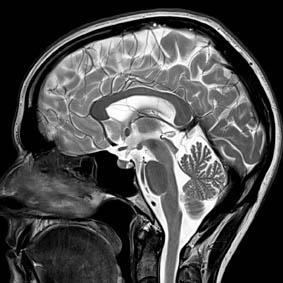
Images at 3T show crystal clarity, but its economics that will make what was once ultra high field into the clinical benchmark of MRI. Image provided by Siemens
It was set a decade ago, a battle between the upstart and the champ. It wasn’t the first time. The standard bearer for magnetic resonance imaging (MRI) had stood its ground many times before, facing down ultra-low, low and mid-field cylindricals. Even a 2T took a shot. Low- and mid-field opens and ones with “high-field” tendencies had theirs, as well. But tried and proven 1.5Ts always came through.
This time it’s different. Three-Tesla entered the ring well-groomed for the fight. It had carved a niche as an ultra-high system, a pathfinder in research for applications that could be ported to 1.5T. Then vendors realized that 3T was ready for the main event.
That was 10 years ago amid hoopla as yet largely unrealized. Aside from better, crisper-looking images, the clinical use of 3T has yielded no clear-cut evidence of a clinical advantage over 1.5T. Having fallen short after so many years of opportunity and unbridled faith by early adopters, the argument that 3T must be the choice of anyone seeking assurance against future obsolescence has begun to wear thin.
It would seem, then, that predictions of its inevitable win over 1.5T and ascension to becoming the clinical benchmark in MRI might have been in error, if not for one thing. Money. The price of 3T systems is falling. The release later this year of Siemens' Magnetom Spectra is an example of that, bearing a price tag about the same as 1.5Ts were just a few years ago (http://www.itnonline.com/content/3t-reaches-high-field-price-point). If comparisons are made using inflation-adjusted dollars, all of today’s 3Ts, in fact, are well below the price 1.5Ts commanded in the early 2000s, when 1.5T scanners equipped with all the bells and whistles bore street prices close to $2 million.
So while 3T may not as yet have proven its heftier field strength to be a clinical advantage over the long-time king of MRI, its images are clearer and its price well within the reach of what buyers are used to paying.
There will be a place for 1.5T in the grand scheme of MRI for many years to come. But economics have turned in favor of the upstart 3T as the new premium clinical performer. And just as this field strength, when it was on the leading edge of imaging science, plowed the ground for new clinical applications ultimately put in place at 1.5T, a small but powerful contingent of 7T scanners is scouting the future for 3T.
Advanced applications will come from this work. And, when they do, there will be a lot of 3T scanners in the installed base, ready to use them.
Related Content
News | Lung Imaging
Oct. 23, 2026 — The University of Arkansas for Medical Sciences (UAMS) Winthrop P. Rockefeller Cancer Institute recently ...
 October 23, 2026
News | Ultrasound Imaging
Oct. 19, 2026 – GE HealthCare has introduced LOGIQ Focus, a new addition to its LOGIQ family of general imaging ...
October 19, 2026 
News | Artificial Intelligence
Oct. 7, 2026 – CARPL.ai has announced a collaboration with HOPPR that will give healthcare providers access to HOPPR's ...
October 08, 2026 
News | FDA
Oct.7, 2026 – MRI2CT Inc. has received FDA 510(k) clearance for NextMR, its AI powered imaging platform, for generating ...
October 07, 2026 
News | Information Technology
October 6, 2026 – Clearsense has introduced a cloud-based medical image archive designed to reduce the cost of ...
October 07, 2026 
News | PET-MRI
Sept. 29, 2026 —Yale New Haven Hospital has installed a state-of-the-art positron emission tomography/magnetic resonance ...
October 05, 2026 
Feature | Digital Pathology | Kyle Hardner
As recently as a decade ago, pathology technology was expected to become more expensive, larger and more precise. Yet in ...
October 02, 2026 
News | ASTRO
Sept. 29, 2026 — The American Society for Radiation Oncology (ASTRO) has named Siemens Healthineers the inaugural ...
September 29, 2026 
News | Computed Tomography (CT)
Sept. 17, 2026 — Royal Philips and Southwest Mississippi Regional Medical Center (SMRMC), which serves as the hub of ...
September 24, 2026 
News | Radiology Education
Sept. 16, 2026 — As urgent care centers and outpatient healthcare facilities expand their use of diagnostic imaging, the ...
September 17, 2026 © Copyright Wainscot Media. All Rights Reserved.

Subscribe Now