

Greg Freiherr has reported on developments in radiology since 1983. He runs the consulting service, The Freiherr Group.
Blog | Clinical Decision Support | October 23, 2015
Does Clinical Decision Support Software Work?
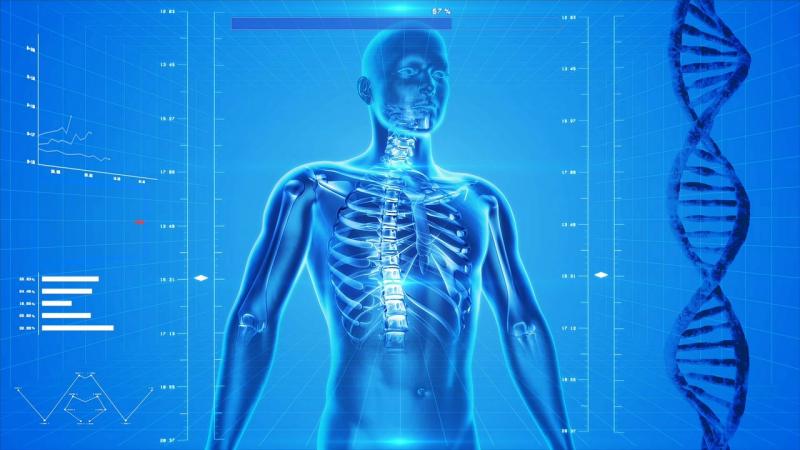
Image courtesy of Pixabay
The idea behind clinical decision support (CDS) is simple — ensure that tests or procedures ordered by referring physicians are best suited to benefit the patient. But does CDS software really work? And how well?
Among the companies likely to highlight CDS on the RSNA exhibit floor are:
- National Decision Support Company, which provides the technical platform, supports and licenses CDS. It is the exclusive distributor of national standards CDS imaging guidelines, providing ACR Select, the Web service version of American College of Radiology (ACR) Appropriateness Criteria;
- Sage Health Management Solutions provides tools including RadWise for imaging CDS. Compliant with ICD-10, RadWise offers hyperlinked references, tracks patient radiation exposure, and reports patient outcomes; and
- Stanson Health, a first-time RSNA exhibitor, combines point-of-care CDS with “actionable insights for analyzing and adjusting provider ordering behavior.”
Radiology-oriented CDS software is available from other vendors, including Nuance and Medicalis.
When CDS software is layered on top of a RIS/PACS, radiologists can access it directly. CDS for referring physicians typically is integrated into e-prescribing and computerized patient order entry systems.
The Feds are pushing the medical community to put CDS in place, although there’s plenty of time to do so. The Centers for Medicare and Medicaid plan to begin tracking the way advanced imaging exams are chosen, but not until 2017. After that, outliers could be paid less for not using CDS.
Regulatory pressure aside, CDS appears to hold value for providers and patients. Evidence has begun to accumulate that its use by radiologists can reduce the number of unnecessary studies.
Last spring researchers from NYU Langone Medical Center reported at the Society for Imaging Informatics in Medicine (SIIM) meeting that radiology exams were in-line with clinical guidelines 50-80 percent more of the time, after a CMS tool was integrated into the center’s dictation software. One of the researchers, Ankur Doshi, M.D., concluded that integrated decision support available to the radiologist at the point of care “may encourage use and help improve adherence to follow-up recommendations.”
Similarly evidence is accruing that CDS positively affects patient welfare when used by referring docs. Research reported in the April issue of the Journal of the American College of Radiology (JACC), also available online, found that the integration of this software into inpatient computerized order entry system increased the overall use of ACR Appropriateness Criteria (AC) when ordering advanced imaging. It also led them to provide the structured data needed to automatically generate AC scores.
Just as the value of CDS is beginning to bubble to the surface, so are the pros and cons of the software behind it. In another article published in the April JACC, researchers from the Cleveland Clinic reported on the use of two CDS products — Medicalis SmartReq and Nuance RadPort. Both used the ACR’s criteria.
The researchers examined how each handled the appropriateness and insurance dispositions of MRI and CT orders, concluding after several months’ experience and 2000 consecutive outpatient MRI and CT orders that the chief difference — and the strongest influence on outcomes — was how the software handled exams without relevant guidelines or with insufficient information.
“Nuance augmented published guidelines with clinical best practice; Medicalis requested additional information utilizing pop-up windows,” the researchers wrote.
Radiologists became frustrated, however, by the need for supplemental information. More than half of the exams scored by the Nuance system, for example, were scored as lacking sufficient information or having no guidelines to support the order. Similarly, radiologists express frustration from having to plow through the multiple windows that popped up in the Medicalis software.
Clearly more needs to be done before CDS is an efficient part of a radiologist’s workflow. It appears, however, that CDS will play an important role in future of radiology.
Editor’s note: This is the third blog in a series of four by industry consultant Greg Freiherr on Clinical Decision Support. The first, “How Clinical Decision Support Can Help Radiologists,” can be found here. The second, "Clinical Decision Support or: How I Learned to Stop Worrying and Love Evidence-based," can be found here.
Related Content

Feature | Artificial Intelligence | Kyle Hardner
A radiologist pulls up a chest CT scan flagged for a pulmonary nodule. One artificial intelligence (AI) tool writes its ...
 September 09, 2026

Feature | Artificial Intelligence | Kyle Hardner
Could the era of the empowered patient change how imaging reports are structured and presented? It’s a question on the ...
August 03, 2026 
News | PACS
July 8, 2026 — Freeland Systems, a cloud PACS and clinical imaging software company, has launched its new customer ...
July 10, 2026 
News | Digital Pathology
June 15, 2026 — Leica Biosystems is expanding the availability of its Aperio GT Elite digital scanner into the EMEA ...
June 15, 2026 
News | Imaging Software Development
June 10, 2026 — DeepHealth, Inc., a wholly owned subsidiary of RadNet, has launched Reporting Pro, an AI-powered ...
June 12, 2026 
News | Artificial Intelligence
April 20, 2026 — DeepTek, provider of the Augmento platform and deepc, the company behind deepcOS, have introduced a ...
April 23, 2026 
News | Digital Pathology
Feb. 11, 2026 — Leica Biosystems has announced the global launch of the Leica CM1950 Cryostat with DualEcoTec Cooling ...
February 11, 2026 
Feature | Cybersecurity | Kyle Hardner
As radiology practices shift toward cloud-based platforms and integrate AI-powered tools, will practices become more ...
January 14, 2026 
Nov. 30, 2025 — At RSNA 2025, Siemens Healthineers is presenting its new imaging chain Optiq AI1, which is powered by ...
December 01, 2025 
News | Archive Cloud Storage
Nov.18t, 2025 — Gradient Health recently announced its Atlas platform is now available on Google Cloud Marketplace ...
November 18, 2025 © Copyright Wainscot Media. All Rights Reserved.

Subscribe Now